
Energy Chains and Cable Carrier Selection: The Complete Guide for Industrial Automation
Energy chains (also called cable carriers, drag chains, or e-chains) are the backbone of virtually every automated industrial system. But choosing the wrong cable for your energy chain—or the wrong energy chain…
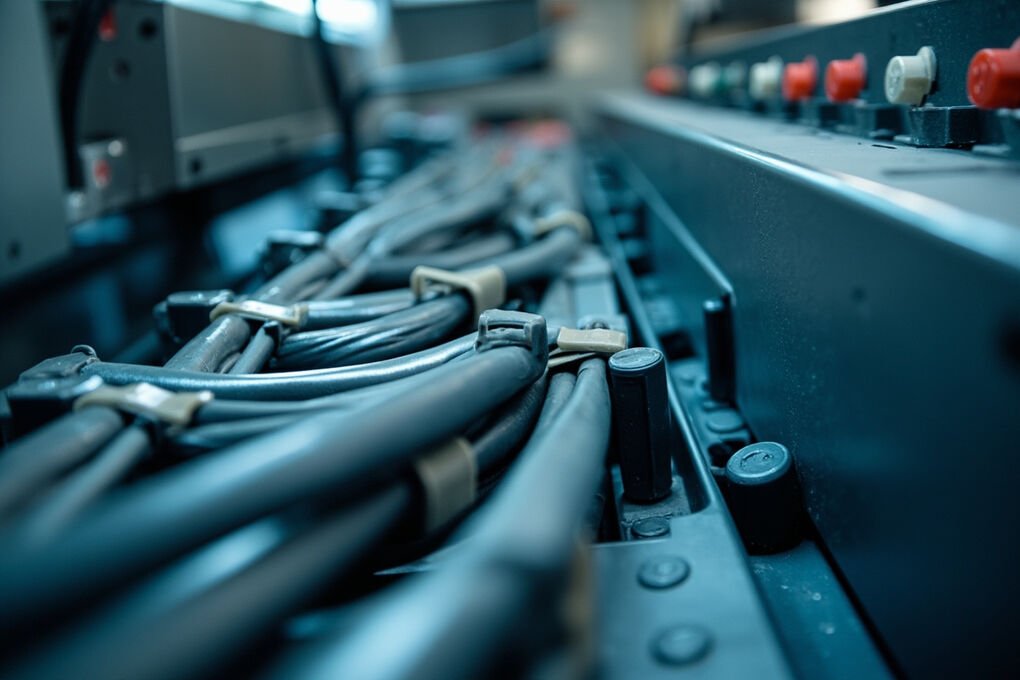
Energy chains (also called cable carriers, drag chains, or e-chains) are the backbone of virtually every automated industrial system. But choosing the wrong cable for your energy chain—or the wrong energy chain for your cables—leads to premature failure, unplanned downtime, and costly production interruptions.
What Is an Energy Chain?
An energy chain is a mechanical guide system that protects and organizes cables and hoses while allowing them to move flexibly in continuous motion applications. Instead of cables hanging loosely and bending sharply as a machine moves, energy chains provide a defined pathway that controls the cable bend radius and minimizes mechanical stress.
Energy chains consist of link segments that articulate together, creating a flexible chain that can bend in one plane while maintaining a roughly linear overall path. Cables travel inside or on the chain, following a controlled radius throughout the machine’s travel cycle.
How Energy Chains Work with Cables
For energy chains to protect cables effectively, both the chain and the cable must be properly matched:
- Controlled bending radius — Energy chains define a minimum bend radius that the cables follow. The cable’s minimum bend radius must be less than the energy chain’s minimum bend radius
- Guided movement — The chain prevents cables from twisting, kinking, or experiencing lateral forces that would damage them
- Separation and organization — Multi-compartment chains separate power and signal cables, reducing EMI cross-talk and simplifying maintenance
- Weight and drag management — Heavier cables sag in vertical chain runs, creating unpredictable loading; cable weight per meter must be considered in chain selection
Choosing the Right Cable for Energy Chain Applications
Key Cable Specifications for Energy Chains
1. Bending Cycles — Cable must be rated for the total expected cycles over the machine’s service life. For example, a machine running 16 hours/day at 10 cycles/minute = 9,600 cycles/day = 3.5M cycles/year. Specify cables rated for your 5-year cycle target.
2. Jacket Friction — Cable jackets inside energy chains must have low friction against chain internals and adjacent cables. PUR and special PE-based jackets offer the best friction performance. PVC jackets have higher friction and wear faster in chains.
3. Tensile Strength — Cables in vertical or angled energy chain runs experience gravitational load. Specify cables with adequate tensile strength ratings or use cable support grips to take the load off the cable.
4. Jacket Material Compatibility — Chain interior materials (various plastics) can interact with cable jackets over time. Test compatibility for your specific chain material if the application is critical.
Continuous Flex vs. Flexing Cable in Energy Chains
Continuous flex cables (also called chain flex or energy chain cables) are specifically designed for energy chain applications with these characteristics:
- Class 5-6 fine-strand conductors for maximum flexibility
- Specially formulated jacket compounds with low friction and high fatigue resistance
- Internal fiber or fabric separators between cable components to prevent adherence during bending
- Rated for millions of unidirectional bending cycles in energy chain environments
Standard high flex cables are designed for reciprocal bending (back-and-forth) and may not perform well in continuous unidirectional energy chain motion. Always specify energy chain-rated cables.
Energy Chain Selection Guidelines
- Select chain size for 60-70% fill ratio — Never fill the chain completely; reserve space for cable expansion and future additions
- Match chain bend radius to cable minimum radius — Chain bend radius must be at least 20% greater than cable minimum bend radius
- Use separation for power and signal cables — Separate compartments prevent EMI and simplify troubleshooting
- Consider chain material for environment — High temperature, chemical exposure, and UV all affect chain material selection
Top Energy Chain Manufacturers and Cable Compatibility
- igus — Largest energy chain manufacturer; extensive chain and cable testing data available
- Kabelschlepp / Metelics — German precision chains; detailed cable compatibility lists
- Tsubaki — Japanese chains popular in Asian manufacturing markets
- DuraTRUE — Specialty chain manufacturer for tight radius applications
Frequently Asked Questions
What is the difference between drag chain cable and continuous flex cable?
In practice, these terms are used interchangeably for cables designed for energy chain (cable carrier) applications. Technically, “continuous flex” refers to uninterrupted unidirectional bending while “drag chain” refers to the cable carrier system itself. High-quality cables designed for one are typically suitable for both applications.
How do I calculate the correct energy chain size?
Add the outer diameters of all cables plus 20% margin for future additions. Then select a chain with an inner width at least 20% greater than this total. The bend radius of the selected chain must exceed the cable’s minimum bend radius specification.
Can I use standard PVC cable in an energy chain?
Standard PVC cables are not recommended for energy chain applications. PVC has high friction against chain internals, poor flex fatigue resistance, and limited temperature range. Use specifically rated energy chain cables with PUR or PE-based low-friction jackets.
How often should energy chain cables be replaced?
Replace energy chain cables preventively based on cycle count vs. rated life, not just on visible damage. The inner conductor strands fatigue before the outer jacket shows damage, so monitor for intermittent electrical faults as an early warning sign of impending failure.