
How Robot Encoders Work and Why Cable Quality Matters
Every precise movement of an industrial robot—from a 6-axis arm picking a component to a delta robot placing a chocolate in packaging—depends on rotary encoders telling the robot's controller exactly where each…
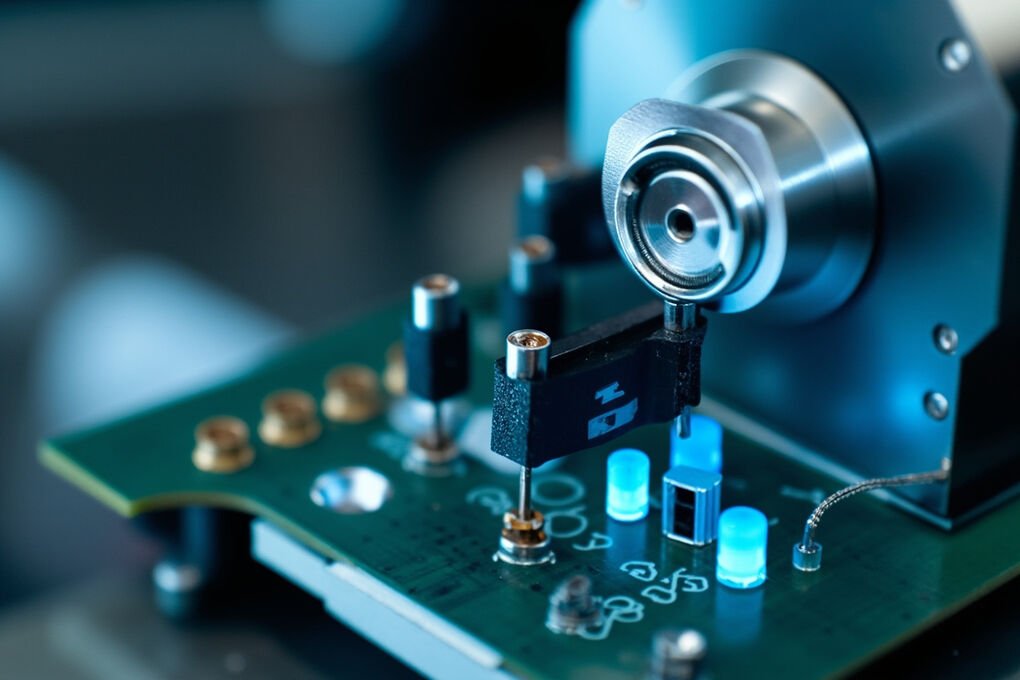
Every precise movement of an industrial robot—from a 6-axis arm picking a component to a delta robot placing a chocolate in packaging—depends on rotary encoders telling the robot’s controller exactly where each joint is positioned. The quality and integrity of the robot encoder cable directly determines positioning accuracy, repeatability, and overall system reliability.
What Is a Robot Encoder?
A rotary encoder is an electro-mechanical device that converts the angular position or motion of a shaft into electrical signals. Industrial robots use two main types:
Incremental encoders generate pulse signals as the shaft rotates. The robot controller counts pulses to determine shaft angle. Home or reference pulses provide absolute position reference at known points.
Absolute encoders output a unique digital code for every shaft position. Even when power is lost and restored, the controller always knows the exact joint position—critical for safety in collaborative robot applications.
The Critical Role of Robot Encoder Cable
Encoder signals are extremely low voltage (typically 5V TTL or 24V line driver) and very sensitive to interference and signal degradation. The encoder cable is not just a connection—it’s an integral part of the measurement system.
Why Encoder Cable Quality Directly Affects Robot Accuracy
1. Signal Attenuation — Long cable runs cause voltage drop. If the encoder signal loses amplitude due to undersized conductors, the controller misinterprets the position, causing inaccuracy.
2. EMI Susceptibility — Robot servo drives generate intense electromagnetic interference. Unshielded or poorly shielded encoder cables pick up this noise, causing spurious pulses and position errors that manifest as poor path accuracy and surface finish defects.
3. Propagation Delay — High-speed encoders (used in delta robots operating at 100+ cycles/minute) require cables with consistent propagation velocity. Poor quality cables introduce variable delay that degrades real-time position accuracy.
4. Mechanical Fatigue — Encoder cables inside robot arms flex millions of times. Broken strands create intermittent connections that cause seemingly random robot positioning errors—some of the most difficult faults to diagnose.
Encoder Cable Specifications for Robotics
Conductor Requirements
Encoder power and signal conductors must be sized appropriately. For typical industrial robot encoders (5V, 100mA per encoder channel):
- Use Class 5 or Class 6 stranded conductors to withstand flexing
- AWG 24-26 (0.2-0.4mm²) is standard; don’t undersize
- Twisted pair construction for each differential signal pair is essential
Shielding Requirements
Single shield (aluminum/polyester foil + drain wire): Sufficient for standard industrial robot environments with moderate EMI from nearby drives.
Double shield (braid + foil): Required near high-power servo drives, VFDs, or welding equipment. Provides superior EMI protection for critical positioning encoders.
Cable Routing in the Robot Arm
Route encoder cables separately from power cables wherever possible. Maintain maximum possible separation inside the robot arm structure. If encoder cables must cross power cable routes, cross at 90 degrees to minimize inductive coupling.
Common Encoder Cable Faults and Symptoms
| Fault Symptom | Possible Cable Cause |
|---|---|
| Robot loses position reference after running | Broken conductor strands from fatigue |
| Intermittent path accuracy errors | Intermittent connection from partial conductor break |
| Erratic encoder counts at high speed | Signal attenuation or EMI pickup |
| Complete position failure on one axis | Open circuit in encoder cable or connector |
IFlexCable Encoder and Feedback Cable Solutions
IFlexCable supplies factory-direct encoder feedback cables compatible with all major robot and servo drive brands including:
- Heidenhain, Renishaw, Baumer, SICK encoders
- Siemens, ABB, Fanuc, Beckhoff servo drive interfaces
- Absolute encoder cables for safety-rated collaborative robot applications
Frequently Asked Questions
Can I extend the original robot encoder cable?
Extending encoder cables is possible but risky. Longer cables increase signal attenuation and EMI susceptibility. If you must extend, use cable of equal or better quality with proper shielded connectors and test thoroughly. For critical applications, consult the encoder manufacturer for maximum cable length specifications.
What’s the difference between incremental and absolute encoder cable?
Incremental encoder cables carry simple pulse and direction signals (2-4 conductors plus shield). Absolute encoder cables carry higher-bandwidth serial data (often using protocols like BiSS, SSI, or EnDat) requiring more conductors and potentially fiber optic links for longer distances. Absolute encoder cables must maintain signal integrity at higher frequencies.
How do I test robot encoder cables?
Use a multimeter to check conductor continuity, an insulation tester (megohmmeter) to verify insulation resistance, and an oscilloscope to check signal quality at the controller end while the robot runs through its range of motion. Any signal anomalies (dropouts, noise spikes) indicate cable problems.