
Silicone High Flex Cable for Extreme Temperatures
Introduction: When Standard Materials Melt Away Standard PVC-insulated cables begin to soften at just 70°C and suffer catastrophic failure by 100°C. Yet countless industrial applications—furnace controls, oven instrumentation, casting automation, glass manufacturing—operate…
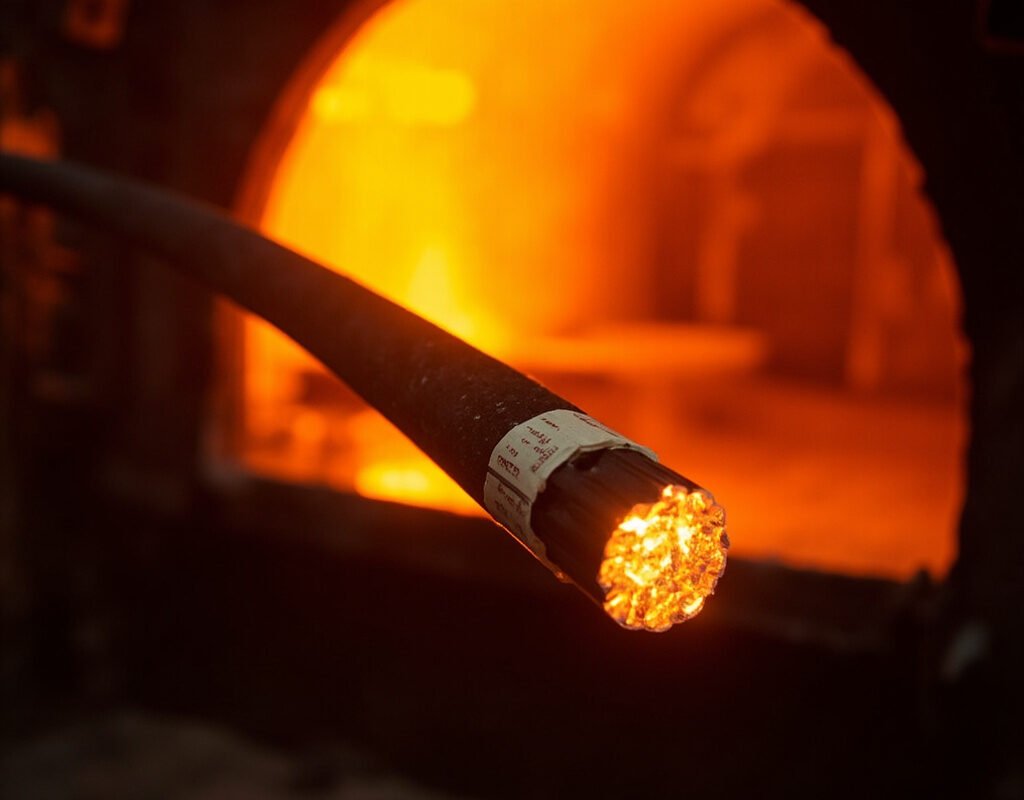
Introduction: When Standard Materials Melt Away
Standard PVC-insulated cables begin to soften at just 70°C and suffer catastrophic failure by 100°C. Yet countless industrial applications—furnace controls, oven instrumentation, casting automation, glass manufacturing—operate continuously at temperatures that would reduce ordinary cable to a molten mess in minutes.
Silicone high flex cable products bridge this gap, maintaining electrical integrity, mechanical flexibility, and safety at temperatures ranging from -60°C to over 200°C. For applications involving direct exposure to hot surfaces, radiant heat flux, or ambient temperatures exceeding 150°C, silicone rubber insulated cable is often the only viable solution.
This engineering guide covers silicone cable technology, material options, application limits, and design considerations for extreme-temperature environments.
Temperature Rating Hierarchy
Insulation Materials by Maximum Continuous Operating Temperature
| Material | Max Temp (°C) | Short-Term Peak (°C) | Flexibility @ 25°C | Flex @ -20°C | Relative Cost |
|---|---|---|---|---|---|
| Cross-linked PVC (XLPE) | 90 | 130 | Good | Fair | 1.5× |
| Rubber (EPR/CPE) | 90–105 | 120–140 | Very good | Good | 2× |
| Nylon/Polyamide | 105 | 140 | Fair | Stiff | 2× |
| TPE / TPU (standard) | 80–105 | 125 | Excellent | Very good | 3× |
| Fluoropolymer (FEP/ETFE) | 150–200 | 200–250 | Fair | Good | 8× |
| Cross-linked PE (XLPE special) | 150 | 250 | Good | Fair | 4× |
| Silicone Rubber (VMQ) | 180–200 | 250–300 | Excellent | Excellent | 5× |
| Fiberglass-silicone composite | 220+ | 350+ | Poor | Rigid | 10× |
| Mica-tape wrapped | 450–500 | 700+ | Not flexible | N/A | 15×+ |
| Ceramic-fiber insulated | 500–1000 | 1200+ | Rigid | N/A | Special order |
Why Silicone Excels at Temperature Extremes
Silicone rubber (polysiloxane) possesses a molecular structure fundamentally different from organic polymers:
- Si-O backbone bond energy: 452 kJ/mol (vs. C-C at 347 kJ/mol) — nearly 30% stronger
- Bond angle flexibility: Si-O-Si angle (~130°–160°) allows chain rotation even at elevated temps
- Thermal stability: Does not depolymerize (unlike some fluoropolymers which can decompose into hazardous gases)
- Low glass transition temperature (Tg): Typically -120°C to -50°C — remains flexible at cryogenic temperatures
- Non-flammable: Self-extinguishing; produces silica ash rather than burning drips (UL94 V-0 achievable)
These properties make heat resistant flex cable with silicone insulation uniquely suited to simultaneous requirements for high temperature AND maintained flexibility—a rare combination in materials science.
Construction Options for High-Temperature Cables
Option 1: Pure Silicone Rubber (VMQ)
The baseline silicone jacket flex cable construction:
- Conductor: Fine-stranded copper (Class 6/7); tinned copper optional for easier stripping
- Insulation: Extruded silicone rubber, typically 0.8–1.5mm wall thickness
- Color coding: Available in standard colors; color stability excellent at temperature
- Voltage rating: Typically 600V rated; higher voltages available with thicker walls
- Temperature range: -60°C to +200°C (continuous)
Advantages: Best flexibility; self-healing minor cuts; easy termination
Limitations: Lower mechanical strength (tear resistance poor); not abrasion-resistant; susceptible to cutting/tearing damage
Option 2: Fiberglass-Braided Silicone (Most Common for Industry)
The workhorse high temperature high flex cable configuration:
Construction layers (outside-in):
  1. Conductor(s): Class 6 fine-strand copper
  2. Primary insulation: Silicone rubber extruded layer
  3. Fiberglass braid: E-glass or S-glass braid, impregnated with silicone varnish
  4. Optional outer jacket: Thin silicone coating or left as braid finish

Temperature capability: 220°C continuous, 300°C short-term
Mechanical protection: Significantly improved over pure silicone alone
Flexibility: Reduced vs. pure silicone (fiberglass stiffens), but still acceptable
Typical specifications:
| Parameter | Value |
|---|---|
| Test voltage | 2000V AC (50Hz, 1 min) |
| Insulation resistance | >1000 MΩ·km @ 20°C |
| Minimum bend radius | 6× outer diameter (static), 10× (dynamic) |
| Flame test | IEC 60332-1 compliant |
Option 3: Ceramic-Fiber Composite (Extreme Applications)
For extreme temp cable needs exceeding 300°C:
- Ceramic fiber (alumina-silicate) insulation/braid: Operates to 650°C continuous
- Mica tape wrapping: Adds dielectric strength; operates to 500°C+
- Quartz fiber braid: Highest temperature option (to 1000°C+)
Trade-off: These constructions sacrifice flexibility significantly. Ceramic-fiber cables are best suited for fixed installations or very low-frequency flexing (<100 cycles/year).
Application Domains
Furnace and Oven Control
Silicone high flex cable is essential for:
- Burner control systems: Igniter wiring, flame sensor leads, gas valve actuators
- Temperature sensors: Thermocouple extension (Type K/N/J with appropriate compensation wire); RTD (PT100) extension
- Door interlock switches: Safety circuitry requiring reliable operation at door-frame temperatures of 80–150°C
- Recirculation fan motors: Fan motor power and feedback within heated plenum spaces
Design note for oven interiors: Even though heat resistant flex cable may tolerate 200°C, position cables away from direct flame impingement and radiant heating surfaces. Add reflective aluminum shielding where cable must pass near heating elements.
Metal Casting and Foundry Operations
Foundry environments present multiple simultaneous challenges:
| Challenge | Severity | Mitigation |
|---|---|---|
| Radiant heat from molten metal | Very high | Route behind heat shields; use fiberglass-braided silicone |
| Molten splash risk | Catastrophic | Physical barrier (conduit, armor) mandatory |
| Mechanical abuse | Moderate | Additional steel wire braid over fiberglass |
| Moisture from cooling systems | Variable | Ensure sealed terminations; IP65+ glands |
Glass and Ceramic Processing
Glass melting furnaces (1300–1600°C) require extreme temperature cable positioned as far from the melt zone as physically possible:
- Level sensor cabling: Must withstand 200–400°C ambient near furnace roof
- Feeder mechanism controls: Reciprocating motion requires high temperature high flex cable with both temperature and flex endurance
- Combustion air dampers: Position feedback from servos inside preheated ductwork
Installation and Safety Considerations
Thermal Management
When installing silicone jacket flex cable in high-temperature areas:
- Account for derating: Current-carrying capacity decreases as ambient temperature rises. At 80°C ambient, derate to approximately 70–80% of room-temperature rating.
- Avoid hot spots: Don’t allow cable to rest directly on heated surfaces. Maintain minimum 25mm air gap or use ceramic standoff insulators.
- Support frequently: Hot cables become softer; support intervals should halve compared to normal temperature installations.
- Seal penetrations: Where extreme temp cable passes through walls/floors, use high-temperature fire-stop sealants (ceramic wool based, not foam).
Personal Safety
- Burn hazard: Even if the cable isn’t damaged, it will be HOT. Allow adequate cooldown before handling. Mark cables with warning labels.
- Silica dust: Cutting/sanding old silicone-fiberglass cable releases respirable crystalline silica dust. Use NIOSH-approved respiratory protection.
- Fire safety: While silicone is self-extinguishing, ensure no combustible materials contact hot cables.
Conclusion
For applications where temperature exceeds the capabilities of conventional polymer-insulated cables (typically >105–150°C), silicone high flex cable provides an indispensable solution. By understanding the trade-offs between pure silicone (maximum flexibility), fiberglass-braided composite (balanced protection), and ceramic-fiber options (maximum temperature), engineers can select the optimal construction for each specific application’s temperature profile, mechanical demands, and budget constraints.
High-temperature cable expertise from Iflexcable.