
Industrial Data Communication Cable
Introduction: Data as the Lifeblood of Smart Manufacturing As Industry 4.0 transforms traditional factories into interconnected cyber-physical systems, industrial data communication cables have evolved from simple point-to-point links into complex network backbones…
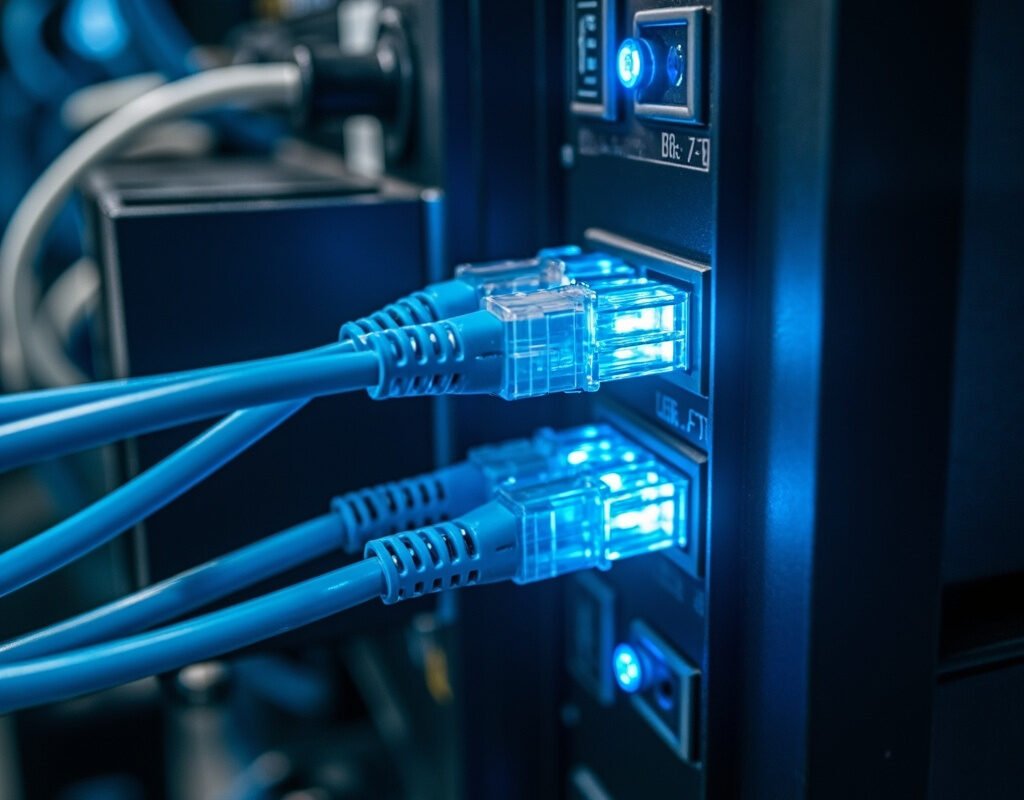
Introduction: Data as the Lifeblood of Smart Manufacturing
As Industry 4.0 transforms traditional factories into interconnected cyber-physical systems, industrial data communication cables have evolved from simple point-to-point links into complex network backbones carrying terabytes of operational technology (OT) traffic. Today’s smart factory depends on seamless data flow between:
- Edge devices: Sensors, actuators, smart instruments generating real-time process data
- Control layer: PLCs, PACs, DCS controllers executing deterministic logic
- Supervisory layer: SCADA/HMI systems providing operator visibility
- Enterprise layer: MES, ERP, cloud platforms consuming analytics data
- External ecosystem: Suppliers, customers, remote monitoring via internet connectivity
Each layer transition requires appropriate data communication cable infrastructure—and the wrong choice at any level creates bottlenecks, security vulnerabilities, and reliability problems that propagate throughout the system.
Iflexcable offers a complete portfolio of industrial data cables spanning twisted-pair copper, fiber optic, and hybrid solutions designed specifically for the unique demands of OT environments.
Industrial Ethernet Cable: Beyond Commercial Cat5e/Cat6
Why Office-Grade Cable Fails in Industry
Commercial Ethernet cables (designed for office networks) are fundamentally mismatched to industrial requirements:
| Challenge | Office Environment | Industrial Environment |
|---|---|---|
| EMI exposure | Minimal (low-power devices only) | Severe (VFDs, welders, large motors) |
| Mechanical stress | Static after installation | Continuous vibration, crushing, abrasion, pulling tension |
| Chemical exposure | None | Coolants, oils, solvents, cleaning agents |
| Installation method | Neatly routed, protected | Drag chains, floor trenches, exposed runs |
| Maintenance access | Easy (drop ceilings) | Difficult (requires downtime) |
| Expected lifetime | 10+ years undisturbed | Must survive harsh treatment daily |
| Cost sensitivity | Moderate | Total cost of ownership critical |
Industrial-grade Ethernet cables address each of these challenges through enhanced materials, specialized construction, and rigorous testing protocols.
Industrial Ethernet Cable Categories
| Category | Bandwidth | Max Frequency | Typical Use Case |
|---|---|---|---|
| Cat6 Industrial | 1 Gbps | 250 MHz | Higher-bandwidth nodes, PoE++ support |
| Cat6A Industrial | 10 Gbps | 500 MHz | Backbone, machine vision, high-data sensors |
| Cat7A Industrial | 10 Gbps+ | 1000 MHz | Future-proof backbone, extreme EMI environments |
| Cat8 Industrial | 25–40 Gbps | 2000 MHz | Emerging: ultra-high-bandwidth OT applications |
Iflexcable IE-Series Industrial Ethernet covers all categories with consistent quality standards:
| Model | Category | Jacket Material | Shielding | Flex Rating | Key Feature |
|---|---|---|---|---|---|
| IE-C6 | Cat6 Industrial | PUR | F/UTP | Light flex | Machine mounting |
| IE-C6A | Cat6A Industrial | PUR | S/FTP | Light flex | 10GBase-T ready |
| IE-C6AF | Cat6A Industrial | TPU | S/FTP | High-flex | Robot/e-chain deployment |
| IE-C7A | Cat7A Industrial | PUR | P/FTP | Static | Maximum EMI immunity |
| IE-C8 | Cat8 Industrial | PUR | S/FTP | Static | 25G/40G future-ready |
Shielding Types Explained
Industrial Ethernet uses standardized shielding notation:
| Code | Meaning | Structure |
|---|---|---|
| F/UTP | Foil-shielded | No individual pairs; overall foil only |
| U/FTP | Foiled pairs | Each pair foiled; no overall shield |
| S/UTP | Braided overall | No individual pairs; overall braid |
| SF/UTP | Foil + braid overall | Combination shield, no individual pair shields |
| S/FTP | Braided overall + foiled pairs | Full combination shielding |
| P/FTP | Foil + braid overall + foiled pairs | Maximum protection (Cat7+) |
Recommendation: For most industrial environments, S/FTP (overall braid + individually foiled pairs) provides optimal balance of EMI protection and flexibility.
Fiber Optic Cable for Industrial Networks
When Copper Reaches Its Limits
Industrial fiber optic cable becomes necessary when:
- Distance exceeds 100m (copper Ethernet limitation for full bandwidth)
- Complete galvanic isolation required (different buildings, areas with ground potential difference)
- EMI immunity non-negotiable (near large VFDs, welding cells, arc furnaces)
- Bandwidth demands exceed copper capacity (machine vision, 4K video surveillance)
- Security required (fiber doesn’t radiate detectable signals; virtually immune to tapping)
- Weight/space constraints favor thin/light cables
Industrial Fiber Cable Types
| Fiber Type | Core Diameter | Wavelength | Max Distance | Bandwidth | Application |
|---|---|---|---|---|---|
| OM2 (MM 50µm) | 50 µm | 850 nm | 550 m @ 1G | 500 MHz·km | Medium-distance plant-wide |
| OM3 (Laser-optimized MM) | 50 µm | 850 nm | 550 m @ 10G | 1500 MHz·km | 10G backbone, vision |
| OM4 (Extended OM3) | 50 µm | 850 nm | 550 m @ 10G | 4700 MHz·km | Extended 10G, future 40G/100G |
| OS2 (Single-mode) | 9 µm | 1310/1550 nm | 40km+ @ 10G | Unlimited | Long-haul, building-to-building |
For most industrial plants: OM3 multimode fiber offers the best price-performance ratio, supporting 10 Gbps to 550 meters (more than sufficient for even the largest facilities). OS2 single-mode is used for inter-building links or extremely long intra-building runs.
Industrial Fiber Cable Construction
Unlike telecom fiber installed in protected ducts, industrial fiber optic cable must survive harsh handling:
| Construction Element | Options | Recommendation for Industry |
|---|---|---|
| Fiber arrangement | Tight-buffered (individual) or loose-tube bundle | Tight-buffered for indoor/outdoor flexibility; loose-tube for buried runs |
| Strength member | Aramid (Kevlar), FRP rod, steel wire | FRP (fiberglass) — non-conductive, strong, lightweight |
| Outer jacket | OFNR (riser), OFNP (plenum), LSZH, outdoor PE | LSZH for occupied spaces; armored PE for direct-burial/trench |
| Armor option | Interlocked aluminum, corrugated steel, none | Aluminum interlock for rodent/mechanical protection in trenches |
| Connector type | LC, SC, ST, MPO/MTP | LC duplex (most common, small form factor); MPO for trunk cables |
Iflexcable FO-Series Industrial Fiber:
- FO-OM3-02 to FO-OM3-24: OM3 tight-buffered, LSZH jacket, 2–24 fibers
- FO-OS2-04 to FO-OS2-24: OS2 single-mode for long-distance
- FO-ARMOR: Armored variants for direct burial/trench routing
- FO-HYBRID: Hybrid copper-fiber composite cables (power + data in one)
Hybrid Cable Solutions
Combining Power and Data in One Cable
One of the fastest-growing segments in industrial data communication cable is the hybrid category—combining power conductors and data transmission elements within a unified jacket. Benefits include:
- Reduced installation labor: One pull instead of separate power and data runs
- Smaller conduit/tray fill: Lower fill ratio than two separate cables
- Guaranteed co-routing: Power and data always together (reduces EMI coupling concerns)
- Cleaner appearance: Professional installation aesthetics
- Space savings: Critical for compact machines and mobile equipment
Common Hybrid Configurations
| Hybrid Configuration | Contents | Typical Application |
|---|---|---|
| Power + PROFINET | 2–4 power conductors + PROFINET-compliant pair | PROFINET-powered field devices |
| Power + Fiber | 2–4 power conductors + OM3/OM4 fiber strands | Remote fiber-connected devices needing local power |
| Power + Bus + Control | Power pair + bus pair + auxiliary control pair | Compact motor/drive integration |
| Power + EtherCAT | 2–4 power conductors + EtherCAT pair | EtherCAT node powering |
Iflexcable HY-Series Hybrid Cables offer custom-configurable combinations with optimized internal geometry ensuring minimal cross-talk between power and data elements.
Network Architecture for Industrial Data
Three-Tier Architecture Model
Modern OT networks follow a three-tier hierarchical model (per IEC 62443):
┌─────────────────────────────────────────────┐
│           LEVEL 3: ENTERPRISE                │
│    (ERP, Cloud, Business Systems)            │
│    ← Industrial fiber backbone →             │
│    ← Firewall/DMZ boundary →                 │
├─────────────────────────────────────────────┤
│           LEVEL 2: SUPERVISORY               │
│    (SCADA, Historian, MES)                   │
│    ← Industrial Ethernet (Gigabit) →         │
├─────────────────────────────────────────────┤
│           LEVEL 1: CONTROL                   │
│    (PLCs, PACs, DCS Controllers)             │
│    ← Industrial Ethernet (Fast/Gigabit) →    │
├─────────────────────────────────────────────┤
│           LEVEL 0: FIELD                     │
│    (I/O, Drives, Sensors, Actuators)         │
│    ← Fieldbus (PROFINET, EtherCAT, etc.) →   │
└─────────────────────────────────────────────┘
Cable Recommendations by Tier
| Tier | Primary Cable Type | Speed Requirement | Distance | Reliability Priority |
|---|---|---|---|---|
| Level 2 (Supervisory) | Fiber (OM3/OM4) or Cat6A | 1–10 Gbps | 10m–500m | High |
| Level 1 (Control) | Industrial Cat6/Cat6A | 100 Mbps–1 Gbps | 1m–100m | Critical |
| Level 0 (Field) | Protocol-specific bus cable | Varies (10M–1G) | 0.1m–100m | Critical |
Emerging Technologies
Single-Pair Ethernet (SPE)
Perhaps the most transformative development in industrial data communication cable technology:
| Parameter | Traditional Ethernet (2-pair/4-pair) | Single-Pair Ethernet |
|---|---|---|
| Data rate | 1 Mb/s – 10 Gb/s | 10 Mb/s – 1 Gb/s |
| Connector | RJ45 (large) | IP67/IP68 mini-connector |
| Reach | 100 m max | Up to 1000 m |
| Power delivery | Separate or PoE | Power over Data Line (PoDL) |
| Standard | IEEE 802.3 (various) | IEEE 80.3cg (10BASE-T1S), 80.3bw (1000BASE-T1) |
Impact: SPE enables direct Ethernet connectivity to every sensor and actuator, replacing the fragmented landscape of legacy fieldbus systems with a unified Ethernet-based architecture. Iflexcable is actively developing SPE-compliant industrial cables aligned with IEC 63171-6 connector/cable interface standards.
Time-Sensitive Networking (TSN)
TSN adds deterministic scheduling capabilities to standard Ethernet, enabling:
- Guaranteed maximum latency bounds
- Ultra-low jitter (sub-microsecond)
- Seamless coexistence of real-time and best-effort traffic
- Redundant path transmission for fault tolerance
TSN requires cables with exceptionally tight specifications for propagation delay consistency and skew between pairs. Cat6A or higher with S/FTP shielding is generally considered the minimum for TSN deployments.
5G in Private Wireless Networks
Private 5G networks are beginning to supplement wired data communication cable infrastructure for:
- Mobile AGVs and AMRs (eliminating drag-chain limitations)
- Rotating machinery (wind turbines, rotary kilns) where cables cannot reach
- Temporary installations and rapidly reconfigurable workcells
- Remote asset monitoring across large geographical footprints
However, 5G will complement—not replace—wired infrastructure for the foreseeable future. Wired industrial data cables remain essential for fixed installations where reliability, security, and deterministic latency cannot be compromised.
Installation Best Practices
Cable Pathway Planning
| Principle | Implementation |
|---|---|
| Service loop allowance | Minimum 3m spare at each termination point for maintenance access |
| Future expansion provision | Install minimum 50% excess capacity in conduits and trays |
| Documentation | Label every cable at BOTH ends; maintain as-built CAD drawings |
| Testing protocol | Verify each link with certified tester before commissioning; retain test records |
Testing and Certification
Every industrial data communication cable link should be tested using industry-standard equipment:
| Test Type | Tool Required | Pass Criteria |
|---|---|---|
| Length verification | TDR-capable tester | Within ±3% of measured length |
| Insertion loss | Certifier (DSX/CFP series) | Per channel limits for category |
| NEXT (Near-End Crosstalk) | Certifier | All wire-pair combinations pass |
| PSNEXT (Power Sum NEXT) | Certifier | Aggregate crosstalk within limits |
| ACR-F (Attenuation-to-Crosstalk Ratio) | Certifier | Positive margin at all frequencies |
| Return loss | Certifier | Impedance match quality indicator |
| Propagation delay / skew | Certifier | Critical for TSN and synchronous protocols |
| OTDR trace (fiber) | OTDR module | Event-free trace, acceptable attenuation |
Troubleshooting Common Issues
| Symptom | Likely Cause | Diagnostic Steps | Resolution |
|---|---|---|---|
| Intermittent connectivity | Marginal connector / partial break | Wiggle test; time-domain reflectometry | Re-terminate; replace cable |
| High error rates | EMI ingress / inadequate shielding | Spectrum analyzer survey; check for nearby noise sources | Upgrade shielding; increase separation |
| Works after reseating | Oxidized contacts / loose termination | Visual inspection of contacts | Clean contacts; re-crimp with proper tool |
| Only half-duplex speed | Autonegotiation failure / wiring error | Verify wire map matches MDI/MDI-X expectation | Check pinout; force configuration |
| Fiber link down | Dirty connectors / excessive bend | Inspect with fiber microscope; measure loss | Clean connectors; reduce bend radius |
Conclusion
Industrial data communication cable forms the connective tissue of modern smart manufacturing. As data volumes grow, protocols evolve, and new technologies like SPE and TSN emerge, the importance of selecting and installing the right cable infrastructure only increases.
Whether you’re deploying a greenfield IIoT network, upgrading existing industrial Ethernet infrastructure, or extending fiber optic backbones to new facility areas, Iflexcable provides the products, expertise, and support to ensure your data communications foundation delivers reliable, secure, high-performance connectivity for decades to come.
Contact our industrial networking specialists for architecture consultation, product selection assistance, and sample evaluation programs.
Keywords used naturally: industrial data communication cable, industrial Ethernet cable, industrial fiber optic cable, IIoT cable, automation network cable, SCADA cable, industrial data cable, hybrid power data cable