
Packaging Machine Cable
Introduction: The Hidden Nervous System of Packaging Machinery The global packaging machinery market exceeds $70 billion annually, driven by e-commerce growth, food safety regulations, and sustainability demands. Behind every form-fill-seal (FFS) machine,…
Introduction: The Hidden Nervous System of Packaging Machinery
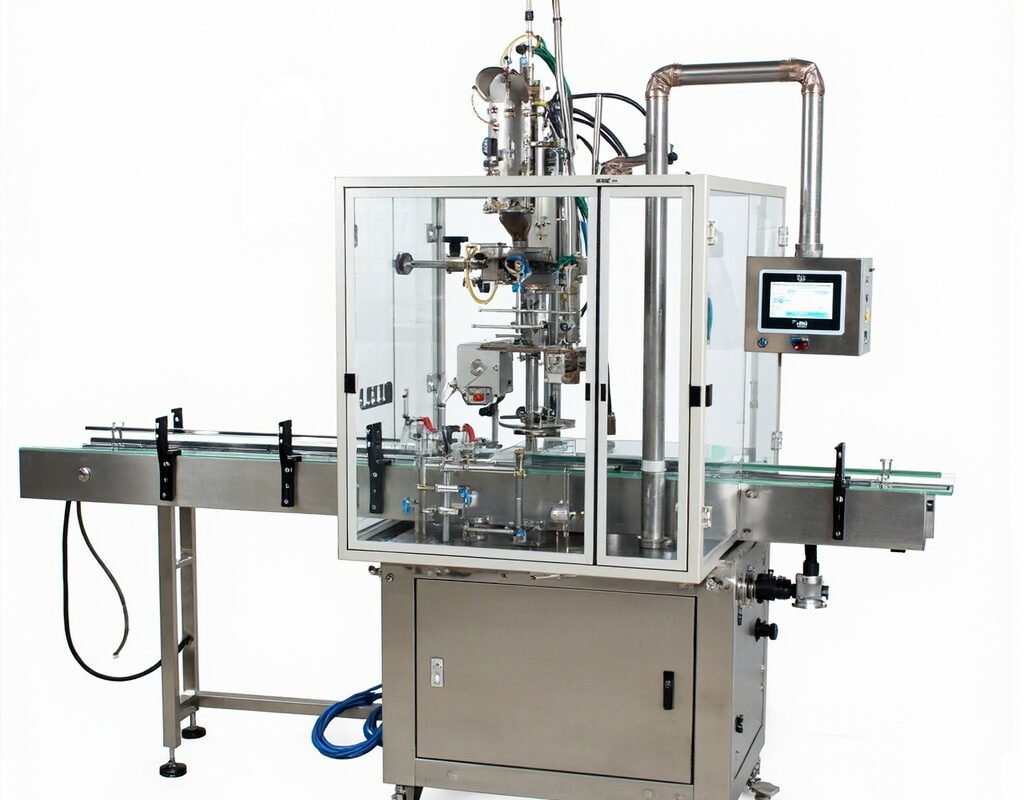
The global packaging machinery market exceeds $70 billion annually, driven by e-commerce growth, food safety regulations, and sustainability demands. Behind every form-fill-seal (FFS) machine, labeler, case packer, and palletizer lies a complex packaging machine cable infrastructure that must operate reliably in demanding conditions:
- High-speed cyclic motion (hundreds to thousands of cycles per hour)
- Frequent cleaning/washdown (food/pharma environments require daily sanitization)
- Product changeovers requiring rapid reconfiguration of sensors and actuators
- Abrasive/contaminating environments (dust, oil, product residue, adhesive overflow)
- 24/7 operation with minimal planned downtime for maintenance
A single cable failure on a 600-cycles-per-minute FFS machine can cause $10,000–$50,000/hour in production loss—not counting scrapped product, cleanup costs, and customer delivery failures.
Iflexcable provides specialized packaging automation cables engineered for the unique demands of modern packaging equipment.
Packaging Machine Categories and Their Cabling Demands
Form-Fill-Seal (FFS) Machines
| Parameter | Typical Range | Cabling Challenge |
|---|---|---|
| Product types | Liquids, powders, granules, solids | Chemical exposure varies widely |
| Film handling | Horizontal or vertical form/fill/seal | Servo-driven film tension control requires encoder feedback |
| Sealing method | Heat (impulse), ultrasonic, hot-air | High-current heating element cables near moving parts |
| Environment | Often clean room (food/pharma) | Food-grade cable mandatory; washdown rated |
Key cabling subsystems:
- Film servo drive (high-power + encoder feedback in tight bundle)
- Sealing bar/element (high-current switched load)
- Photoeye sensor array (product detection; dozens of sensors across machine width)
- Date/lot printer integration (data + power for inkjet or thermal printers)
- HMI/panel connections (operator interface)
Labeling Machines
| Type | Speed | Special Cable Need |
|---|---|---|
| Shrink sleeve | 100–400/min | Heat tunnel proximity = heat resistant cable |
| Stretch sleeve | 200–500/min | Torsional stress from mandrel rotation |
| RFID/inlay | 50–200/min | EMI-shielded antenna cable |
Case Packers & Palletizers
| Equipment | Motion Profile | Primary Cable Requirement |
|---|---|---|
| Gantry palletizer | Long-travel linear axes (5-20m) | Long-run drag chain cable |
| Robot arm palletizing | 6-axis robot motion | Torsion-resistant base rotation cable |
| Stretch wrapper | Rotating turntable + vertical carriage | Anti-twist + continuous flex combination |
Environmental Classifications
Clean Room / Controlled Environment (Class ISO 7+)
| Requirement | Specification |
|---|---|
| Outgassing | IEC 60654-4 compliant materials |
| Surface finish | Smooth (Ra <0.8 um); no texturing |
| Color | White or light blue (visual contamination detection) |
| Cleaning protocol | Wipe-down with IPA; no particulate shedding |
→ Iflexcable PKG-CR Series: Clean-room packaging machine cable with LSZH jacket, non-shedding surface, individually shielded data pairs.
Food Processing / Washdown Environment
| Requirement | Specification |
|---|---|
| Chemical resistance | Caustic cleaners, acid sanitizers, quats, hydrogen peroxide |
| Food contact compliance | FDA 21 CFR 177.2600, EU 1935/2004 |
| Sanitary design | No crevices; smooth surface; self-draining profile |
| Temperature range | -25C to +105C (wash water temp) |
→ Iflexcable PKG-FD Series: Food-grade packaging cable meeting full FDA/EU compliance with IP69K-rated jacket options.
General Industrial (Non-Food)
| Requirement | Typical Spec |
|---|---|
| Oil/grease resistance | Standard industrial-grade polymer |
| Flex life | 2–10M cycles depending on application zone |
| Flame retardance | IEC 60332-1 Category C minimum |
→ Iflexcable PKG-ID Series: Industrial-duty packaging automation cable with robust PUR jacket, standard EMC shielding.
High-Cycle Design Considerations
Calculating Fatigue Life Requirements
Annual cycles = CPM x minutes/hour x hours/day x days/year x utilization%

Example: FFS machine @ 200 CPM:
  - Operating: 16 hrs/day, 250 days/year
  - Annual cycles: 200 x 16 x 250 x 85% (utilization) = 680,000 cycles/year
  - 5-year target: 3.4 million cycles minimum
  - Safety factor 2x: Specify cable rated for ~7 million cycles
Zone-Based Cable Specification Strategy
Not all cables on a packaging machine experience the same stress. Apply appropriate spec by zone:
| Machine Zone | Stress Level | Recommended Cable Grade |
|---|---|---|
| Product conveyor / timing belts | HIGH | Standard high-flex (Class 6), 5–10M cycles |
| Sensor array mounting (moderate vibration) | MODERATE | Light-flex (Class 5–6), 1–5M cycles |
| Control cabinet internal (static after install) | STATIC | Standard fixed-installation cable |
| Operator HMI panel (occasional adjustment) | LIGHT | Flexible but not continuous-flex rated |
| External field devices (solenoid valves etc.) | LOW-MODERATE | Standard flexible cable |
This zone-based approach optimizes cost by reserving premium high-speed packaging cable only where actually needed.
Connector Recommendations for Packaging
| Application | Connector Type | Key Feature |
|---|---|---|
| Servo motor/encoder (circular) | Metal-shell with locking ring | Vibration-proof; high-cycle mate durability |
| Valve manifold (multi-pin) | Han-Eco style modular | Field-replaceable; sealed |
| HMI panel (rear) | D-sub or M12 multipole | Shielded for EMI in dense panel |
| Heating elements | Ceramic block terminal or high-temp connector | Must survive sealing temperature |
Maintenance and Troubleshooting
Predictive Maintenance Indicators
| Indicator | Detection Method | Action Threshold |
|---|---|---|
| Jacket abrasion at guide points | Caliper measurement at wear points | Replace when OD reduced >15% from original |
| Shield continuity degradation | Measure shield resistance end-to-end | Investigate if >2x initial value |
| Conductor resistance drift | Periodic 4-wire measurement | Investigate if any phase >10% increase |
| Connector contact condition | Thermal imaging during operation | Hot spot >15C ambient = re-terminate |
Common Failure Modes
| Failure Mode | Root Cause | Prevention |
|---|---|---|
| Photoeye cable damage from product impact | Insufficient protection/routing | Add mechanical guard; reroute away from product path |
| Seal heater cable overheating | Loose connection or undersized gauge | Retorque; verify sizing calc |
| Encoder feedback noise | EMI from adjacent VFD/heater circuits | Improve separation; add ferrites |
| Washdown water ingress | Damaged jacket or improper termination | Replace cable; use molded cordsets |
Conclusion
Packaging machinery represents a microcosm of automation challenges—speed, cleanliness, reliability, and flexibility all competing for priority in cable specification. A zone-based approach that matches cable performance to actual stress levels delivers optimal lifecycle cost while ensuring critical subsystems receive the premium packaging machine cable they demand.
Iflexcable’s PKG-Series portfolio covers clean-room (PKG-CR), food-grade washdown (PKG-FD), and general industrial (PKG-ID) applications, with custom hybrid configurations available for OEM machine builders.
Keywords used naturally: packaging machine cable, FFS machine cable, labeling machine cable, wrapping machine cable, packaging automation cable, food packaging cable