
Industrial Bus Cable & Fieldbus Guide
Introduction: The Nervous System of Automation Industrial communication networks—fieldbus and industrial Ethernet connecting PLCs, HMIs, drives, sensors, and actuators—are the nervous system of modern manufacturing. And just as healthy nerves enable coordinated…
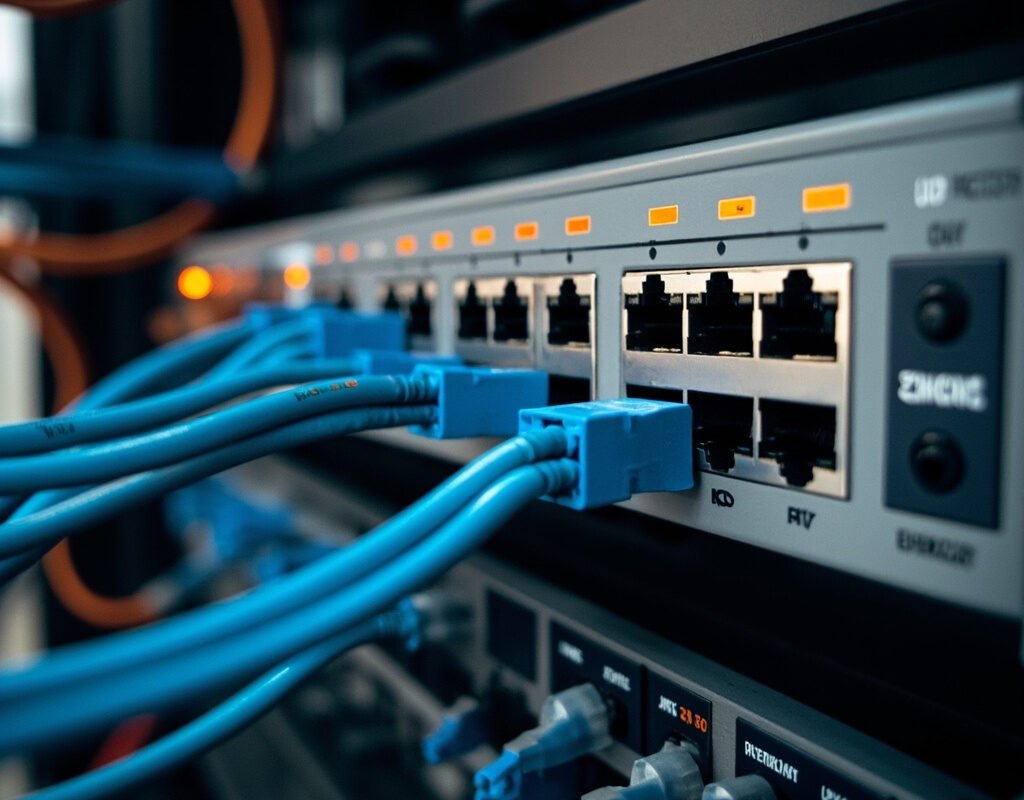
Introduction: The Nervous System of Automation
Industrial communication networks—fieldbus and industrial Ethernet connecting PLCs, HMIs, drives, sensors, and actuators—are the nervous system of modern manufacturing. And just as healthy nerves enable coordinated function, every automation system depends entirely on industrial bus cable quality and integrity.
Unlike office-grade Ethernet operating in benign environments, fieldbus cables must perform reliably amid:
- High-intensity EM fields from VFDs, welders, large motors
- Extreme temperatures from -30°C (frozen food) to +80°C+ (foundry)
- Mechanical stress from flexing, vibration, crushing, abrasion
- Chemical exposure to coolants, lubricants, solvents
- Electrical transients including surge, ESD, conducted/radiated EMI
A failed bus cable segment doesn’t merely interrupt one device—it brings down entire cells, corrupts data across networks, and triggers cascading failures notoriously difficult to diagnose.
Iflexcable develops protocol-specific fieldbus cables for every major industrial standard, optimized for electrical, mechanical, and environmental demands.
Protocol Landscape Overview
| Protocol Family | Examples | Physical Layer | Max Speed | Market Share Est. |
|---|---|---|---|---|
| Industrial Ethernet | PROFINET, EtherCAT, EtherNet/IP, Modbus TCP | IEEE 802.3 | 10 Gbps (emerging) | ~45% combined |
| Real-Time Ethernet | EtherCAT, PROFINET IRT, SERCOS III | Deterministic ETH | Sub-µs jitter | ~12% |
| Safety-Critical | PROFIsafe, CIP Safety, Safety over ET | Layered on base | Same as underlying | Growing fast |
| Wireless/Hybrid | IO-Link Wireless, 5G-TSN | RF/Ethernet hybrid | Varies | Emerging |
Key insight: Your fieldbus cable choice is determined primarily by your PLC/controller brand—not theoretical superiority. Siemens → PROFINET cable. Beckhoff → EtherCAT cable. Rockwell → DeviceNet/EtherNet/IP cable.
Protocol-by-Protocol Cable Specs
PROFINET Cable (IEC 61158 Type A/B)
PROFINET (Siemens) is currently the world’s most deployed industrial bus cable protocol:
PROFINET Class A (Green Cable) — General Automation
| Parameter | Specification |
|---|---|
| Impedance | 100 ± 15 Ω @ 1–100 MHz |
| Propagation delay | <5 ns/m |
| Delay skew | ≤10 ns/100m |
| Bandwidth | Cat 5 equivalent (100 MHz) |
| Color | Green jacket (PI guideline) |
| Shielding | Foil + tinned copper braid |
| Max segment length | 100 m |
PROFINET Class B (Yellow Cable) — Motion Control
Enhanced for PROFINET IRT requiring deterministic timing:
- 2 × 23 AWG finer-stranded conductors
- Impedance: 100 ± 10 Ω @ 1–350 MHz
- Delay variation: ≤2 ns/100m; Skew: ≤1.5 ns/100m
- Bandwidth: Cat 6A equivalent (500 MHz)
- Yellow jacket identification
Iflexcable PN-Series manufactured to strict PI guidelines and certified for PROFINET installations.
EtherCAT Cable (ETG Compliant)
EtherCAT rapidly gained adoption for high-performance motion control due to “processing on the fly” efficiency:
| Parameter | ETG Spec |
|---|---|
| Impedance | 100 ± 15 Ω |
| Topology support | Line, tree, star (ANY topology!) |
| Max nodes/segment | 65,535 (practically hundreds) |
| Update time | <30 µs for 100 nodes |
| Jitter | <20 ns |
Important: EtherCAT works with standard Cat5e/Cat6 cables, but industrial-grade EtherCAT cable with enhanced shielding and rugged jackets is strongly recommended for industrial environments.
Iflexcable EC-Series: EC-100 (Cat5e indoor), EC-200 (Cat6 industrial PUR), EC-400 (high-flex for robots/e-chain), EC-800 hybrid (Power+EtherCAT).
DeviceNet Cable (ODVA Compliant)
Based on CAN physical layer, widely used in Allen-Bradley/Rockwell environments:
Thick Cable (Main Trunk)
- Signal: 1 pair 22 AWG twisted (tr-drain + blue/white)
- Power: 1 pair 14 AWG (red/black, 24VDC)
- Shield: Foil (100%) + braid (≥85%); Impedance: 120 ± 12 Ω
- Current capacity: up to 8A; Jacket: gray
Thin Cable (Branch Drops)
- Signal: 1 pair 22 AWG; Power: 1 pair 18 AWG
- Max drop length: 6 m (20 ft); Jacket: gray (thin profile)
Iflexcable DN-Series fully ODVA-compliant, available in thick trunk/thin drop/pre-assembled cordsets.
CC-Link Cable (CLPA Compliant)
Dominates Japanese/Asian automation markets:
| Parameter | Classic (RS-485) | IE Field (Ethernet) |
|---|---|---|
| Conductor | 2–4 pair, 20–22 AWG | 2–4 pair, Cat5e equivalent |
| Impedance | 110–130 Ω | 100 Ω |
| Max stations | 64 | 254 |
| Transmission rate | 10 Mbps | 1 Gbps |
| Terminator | Required both ends | Required both ends |
Iflexcable CL-Series covers both classic CC-Link and CC-Link IE requirements.
Modbus RTU/TCP Cable
Modbus RTU (Serial RS-485):
- 1 twisted pair, 18–24 AWG; 120 Ω nominal impedance
- Shield: foil minimum, braid preferred for industry
- Max length: 1200m (without repeaters); Daisy-chain topology
Modbus TCP: Uses standard Ethernet (Cat5e/Cat6). Apply same industrial-grade recommendations.
Universal Considerations for All Fieldbus Cables
Impedance Matching: The #1 Rule
Every fieldbus cable includes characteristic impedance (most commonly 100 Ω or 120 Ω). Maintaining this impedance consistently is THE fundamental rule:
Impedance mismatch consequences:
- Signal reflections causing bit errors and increased jitter
- Reduced noise margin → susceptibility to interference
- Retransmission overhead → reduced effective throughput
Practical guidelines:
- Use single manufacturer cable for any continuous segment
- Match connectors/p terminators to cable impedance
- Install correct terminating resistances (120 Ω RS-485 / 100 Ω Ethernet)
- Avoid bends < 4× diameter deforming internal geometry
Shielding and Grounding
| Environment Severity | Recommended Shield |
|---|---|
| Factory floor (general) | Foil + tinned copper braid |
| Near VFDs/welders | Double braid or foil+braid+tape |
| Long runs >100m | Combination shield + individual pair shields |
Grounding rules:
- Single-point: Ground at controller end only (when ground potential difference >1V)
- Multi-point: Bond at both ends (preferred when potentials well-controlled)
- 360° termination: Never rely on pigtails for HF shield bonding
Environmental Ratings
| Rating | Temp Range | UV | Oil/Coolant | Application |
|---|---|---|---|---|
| CM/CMR Rated | -20~+75°C | Limited | Limited | Raised floors, risers |
| PUR | -40~+90°C | Good (additives) | Excellent | Machine mounting |
| TPE | -40~+105°C | Good | Very Good | Flexible, outdoor-capable |
| LSZH | -15~+80°C | Varies | Varies | Public buildings, marine |
Topology and Installation
| Topology | PROFINET | EtherCAT | DeviceNet | CC-Link | Modbus RTU |
|---|---|---|---|---|---|
| Star | ✅ | ✅ | ❌ | ✅ | ❌ |
| Tree | ✅ | ✅ | ❌ | ✅ | ❌ |
| Ring (redundancy) | ✅ (MRP) | ✅ (cable red.) | ❌ | ✅ | ❌ |
| Free (any) | ✅ | ✅ unique advantage | ❌ | ❌ | ❌ |
Segment Length Limits:
| Protocol | Max Segment |
|---|---|
| EtherCAT | 100m/segment; 100km total |
| DeviceNet (thick) | 500 m |
| DeviceNet (thin drop) | 6 m |
| CC-Link Ver.1/2.0 | 100m@10Mbps / 1200m@156Kbps |
| Modbus RTU | 1200 m @9600 baud |
Troubleshooting Guide
| Symptom | Likely Cause | Remedy |
|---|---|---|
| High CRC errors | EMI ingress (usually VFD) | Improve shielding; increase separation |
| Works cold fails later | Thermal drift affecting connections | Replace with wider temp-range cable |
| Some nodes fail only | Segment too long/overloaded | Split with repeater |
| Entire network down | Missing/wrong terminators | Verify terminator presence/value |
Future Trends
- Single-Pair Ethernet (SPE): IEC 63171-6 enabling 10Mb/s–1Gb/s over ONE twisted pair—revolutionary for sensor density
- Time-Sensitive Networking (TSN): Deterministic Ethernet requiring tight delay/s skew specifications
- Power-over-Ethernet Industrial (PoE++): Up to 90W over data cables eliminating separate power runs
- Hybrid Fiber-Copper: Optical fiber bandwidth + copper power delivery in single hybrid fieldbus cable
Iflexcable actively developing next-generation industrial communication cables aligned with these trends. Contact our specialists whether deploying legacy systems or cutting-edge real-time Ethernet.
Keywords used naturally: industrial bus cable, fieldbus cable, PROFINET cable, EtherCAT cable, DeviceNet cable, CC-Link cable, Modbus cable, industrial communication cable, industrial Ethernet cable