
Industrial Cable Applications: From Automation to Robotics
Comprehensive guide to industrial cable applications including automation, robotics, and manufacturing. Learn about control cables, power cables, VFD cables, and industrial Ethernet solutions.
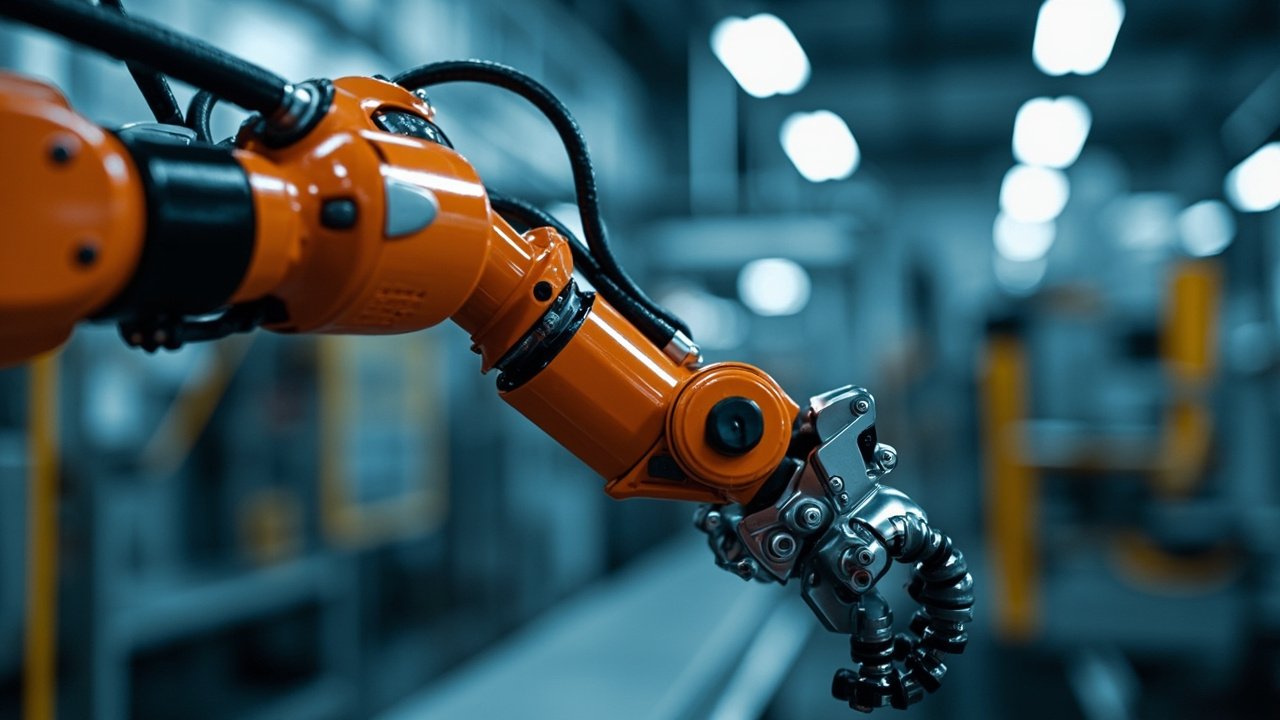
Industrial cables form the nervous system of modern manufacturing facilities. From simple control circuits to complex robotic assembly lines, the right cable ensures reliable operation and minimizes costly downtime. This guide covers the essential cable types and applications in industrial environments.
The Role of Cables in Industrial Automation
Modern factories depend on interconnected systems:
- PLC Controllers: Coordinate production processes
- Variable Frequency Drives (VFD): Control motor speed and torque
- Servo Systems: Enable precise positioning in robotics
- Industrial Networks: Ethernet, Profinet, DeviceNet for communication
Each system requires specific cable types optimized for industrial conditions.
Industrial Cable Categories
Power Cables
Deliver electrical power to machinery and equipment:
| Cable Type | Voltage Rating | Typical Applications |
|---|---|---|
| NSHXAFLÖ 0.6/1kV | 600/1000V | Fixed industrial installations |
| NSSHÖU 3.6/6kV | 3.6/6kV | Medium voltage distribution |
| YY 0.6/1kV | 600/1000V | Flexible power connections |
| CY 0.6/1kV | 600/1000V | Screened flexible power |
Control Cables
Transmit control signals and low-voltage power:
- YY (PVC insulated, PVC sheath): General purpose control
- CY (Copper screen): EMC-critical environments
- SY (Steel wire braid): Mechanical protection
- LiYY / LiYCY: Flexible control cables (European designations)
Instrumentation Cables
Connect sensors, transmitters, and measurement equipment:
- Pair/Triples: For analog signals (4-20mA, 0-10V)
- Twisted Pairs: Noise rejection for differential signals
- Individually Screened: For multi-pair applications
- Armored: For harsh industrial environments
Motor Connection Cables
Specialized cables for motor connections:
| Cable Type | Features | Application |
|---|---|---|
| OWIM | Oil resistant, withstands bending | VFD motor connections |
| TOPFLEX | Highly flexible, oil resistant | Continuous flex applications |
| PUR-JZ | PU jacket, high flex life | Cable chains |
Industrial Ethernet and Networking
Ethernet Protocols in Industry
Industrial networks require ruggedized cables:
- PROFINET: Siemens industrial Ethernet standard
- EtherCAT: High-performance real-time Ethernet
- CC-Link IE: Gigabit industrial Ethernet
- Ethernet/IP: ODVA industrial Ethernet protocol
Cable Requirements for Industrial Ethernet
Industrial Ethernet cables must meet stricter requirements than office LAN cables:
- Shielding: Overall braid or foil shield for EMC protection
- Environmental: Oil, UV, and temperature resistance
- Mechanical: Tensile strength, crush resistance, impact resistance
- Flex Life: Tested for millions of bending cycles
Cat5e vs Cat6 vs Cat7 for Industrial
| Category | Max Frequency | Industrial Application |
|---|---|---|
| Cat5e | 100 MHz | Basic automation, 100BASE-TX |
| Cat6 | 250 MHz | Standard industrial Ethernet, 1000BASE-T |
| Cat6A | 500 MHz | 10GBASE-T, industrial automation |
| Cat7 | 600 MHz | High-speed data acquisition |
Robotic Cable Applications
Robot Types and Cable Requirements
Articulated Robots
- Multi-axis movement requires highly flexible cables
- Cables must withstand continuous flexing in cable chains
- Essential for robot arm connections
- Typical bend radius: 8-12× cable diameter
SCARA Robots
- Selective compliance for assembly operations
- Cables for pick-and-place applications
- Moderate flex requirements
Collaborative Robots (Cobots)
- Human-robot collaboration safety requirements
- Smaller cable sizes for compact designs
- Enhanced flexibility for safety
Robot Cable Design Considerations
Torsional Stress
Cables in robot joints experience twisting:
- Torsion Rating: Typically ±180° per 1m cable length
- Special Stranding: Bunched conductor construction
- Bandmarking: Position marking for twist monitoring
Bend Radius Requirements
Critical for cable longevity:
- Fixed installation: 6× cable diameter minimum
- Cable chain: 8× cable diameter minimum
- Robot arm: 10-12× cable diameter
VFD (Variable Frequency Drive) Cables
VFD Cable Requirements
VFDs generate high-frequency voltage spikes that standard cables cannot handle:
- Shielding: Copper braid shield (85% coverage minimum)
- Symmetrical Construction: Three power conductors + ground
- Low Capacitance: Reduces reflected waves
- Motor Starting Performance: Handles high dV/dt
VFD Cable Types
- Symmetrical Three-Phase: Dedicated VFD power cable
- EMC-Conductive: Integrated drain wire and shield
- Steel Armor: Mechanical protection in harsh environments
Common VFD Problems from Improper Cabling
- Premature motor bearing failure (due to common mode voltage)
- Electromagnetic interference (EMI) with control systems
- Voltage overshoot at motor terminals
- Reduced drive efficiency and overheating
Oil and Chemical Resistance
Industrial Cable Jacket Materials
| Material | Oil Resistance | Chemical Resistance | Temperature Range |
|---|---|---|---|
| PVC | Moderate | Moderate | -40°C to +70°C |
| PUR (Polyurethane) | Excellent | Excellent | -40°C to +80°C |
| TPE (Thermoplastic Elastomer) | Very Good | Good | -50°C to +90°C |
| Neoprene | Very Good | Good | -35°C to +90°C |
Oil Resistant Applications
- Oil refineries and petrochemical plants
- Steel mills with rolling mill equipment
- Food processing with cutting oils
- Wind turbine gearboxes
Temperature Considerations
Cold Temperature Applications
Special cables for cold environments:
- Cold Bend Rating: -40°C or lower for outdoor winter installations
- Flexible at Low Temps: Cable remains flexible for installation
- Avoid PVC: Becomes brittle below -10°C
- Use PE or PUR: Better cold temperature performance
High Temperature Applications
Cables for hot environments:
- Silicone Cables: Up to +180°C
- PTFE (Teflon): Up to +260°C
- Mineral Insulated: Up to +1000°C
Installation Best Practices
Cable Tray Selection
- Ladder Type: For heavy power cables
- Solid Bottom: For instrumentation and control cables
- Mesh Type: Good ventilation, light weight
Separation Requirements
Maintain proper separation to prevent interference:
- Power vs Control: Physical separation or barrier
- HV vs LV: Minimum 300mm separation
- Signal vs Power: Shielded cables or increased separation
Gland Selection
- IP Rating: Match to environment (IP67 for outdoor/wet)
- EMC: EMC-rated glands for screened cables
- Ex-proof: ATEX/IECEx glands for hazardous areas
Conclusion
Industrial cable selection requires careful consideration of application, environment, and performance requirements. The correct cable choice ensures reliable operation, reduces maintenance costs, and prevents costly production downtime.
FAQ
Q: What is the difference between control cables and instrumentation cables?
A: Control cables carry on/off signals and low-voltage power for controlling devices. Instrumentation cables carry analog measurement signals (4-20mA, 0-10V) from sensors and transmitters. Instrumentation cables typically have stricter shielding and twisted pair requirements for signal integrity.
Q: How do I select the right bend radius for industrial cables?
A: The minimum bend radius depends on the cable type and application. Fixed installations typically require 6× cable diameter, cable chain applications require 8×, and robot arm applications require 10-12×. Always consult manufacturer specifications.
Q: Can I use standard LAN cables in industrial environments?
A: No. Industrial Ethernet cables are specifically designed with better shielding, stronger jackets, wider temperature ranges, and higher flex life. Standard office LAN cables will fail quickly in industrial conditions.
Q: Why do VFD applications require special cables?
A: Variable Frequency Drives produce high-frequency voltage spikes and PWM waveforms that can cause electromagnetic interference, voltage overshoot at motor terminals, and premature motor bearing failure if standard cables are used. VFD cables have proper shielding and symmetrical construction to handle these conditions.