
Rising Demand for Fire Resistant Cables in Construction Projects
Analysis of rising demand for fire resistant cables driven by stricter building codes, infrastructure investments, and increased fire safety awareness. Market trends and application overview.
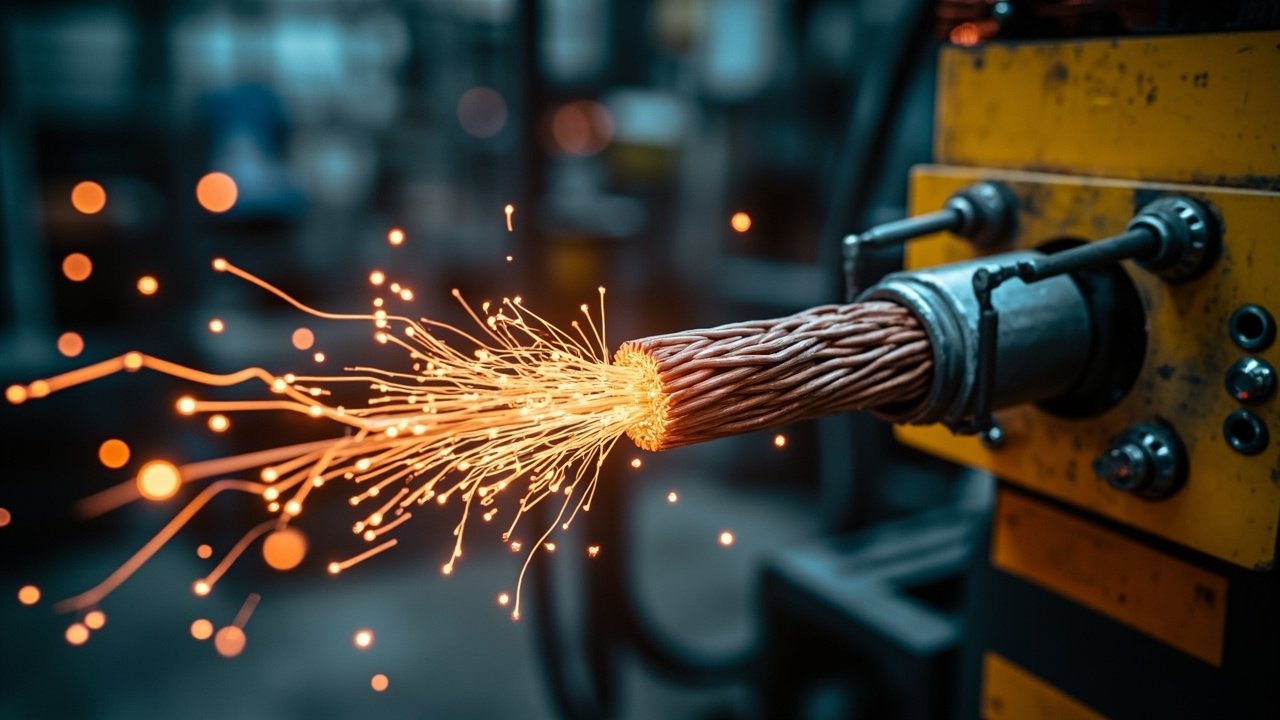
Stringent fire safety regulations in commercial and residential construction projects worldwide are driving significant growth in the fire resistant cable market. Building codes increasingly mandate fire resistant cables in critical applications, creating new opportunities and challenges for the construction industry.
Fire Safety Regulations Driving Market Growth
Global Regulatory Trends
Fire safety regulations are becoming more stringent worldwide:
Europe
- EN 50200: Standard for fire resistant cable survival time
- Construction Products Regulation (CPR): Euroclass reaction to fire standards
- High-Rise Building Codes: Stricter requirements for tall buildings
North America
- NEC Articles 760 and 770: Fire alarm and optical fiber cable requirements
- UL 2196: Fire resistive cable testing standard
- City-specific codes: New York, Chicago, Los Angeles have unique requirements
Asia-Pacific
- China: GB 50016-2014 fire safety standards
- India: NBC (National Building Code) revisions
- Singapore: Enhanced fire safety requirements
Key Market Drivers
| Driver | Impact on Fire Resistant Cable Market |
|---|---|
| Stricter building codes | Mandatory fire resistant circuits in more applications |
| Infrastructure investment | Metro, tunnel, and public building projects |
| Insurance requirements | Lower premiums for fire-safe buildings |
| Urban densification | More high-rise buildings requiring fire safety |
| Awareness of fire risks | Proactive specification of fire resistant cables |
Applications Driving Demand
Fire Alarm Systems
Fire alarm cables are the largest application segment:
- Initiating circuits: Smoke detectors, heat sensors
- Notification circuits: Strobes, horns, speakers
- Communication circuits: Central station monitoring
Required fire resistance: Typically 30-120 minutes depending on building height and occupancy.
Emergency Lighting
Emergency lighting maintains circuit integrity during fires:
- Exit signs: Critical for evacuation
- Pathway lighting: Illuminated escape routes
- Backup power circuits: Battery backup connections
Fire Suppression Systems
Fire suppression system cables must survive fires:
- Sprinkler monitoring: Flow switches, valve supervision
- Fire pump circuits: Critical for water supply
- CO2 systems: Suppression activation circuits
Smoke Control Systems
Modern buildings require smoke control:
- Stairwell pressurization: Keep escape routes smoke-free
- Smoke exhaust fans: Remove smoke from occupied spaces
- Smoke curtains: Control smoke spread
Commercial Construction Applications
High-Rise Buildings
Tall buildings face the greatest fire safety challenges:
Tower Safety Requirements
- Vertical risers: Fire resistant cables in shaft spaces
- Evacuation systems: Emergency voice communication
- Firefighter communication: Dedicated circuits for fire brigade
Height-Based Requirements
| Building Height | Typical Fire Resistance Requirement |
|---|---|
| < 30m | 30-60 minutes |
| 30-60m | 60-90 minutes |
| 60-100m | 90-120 minutes |
| > 100m | 120+ minutes |
Healthcare Facilities
Hospitals have unique fire safety needs:
- Patient evacuation challenges: Bedridden patients require protected circuits
- Critical care equipment: Life support systems must remain powered
- Operating theaters: Fire suppression in high-risk areas
Data Centers
Data centers require fire resistant cables for:
- Fire detection: Early warning systems
- Gas suppression: Clean agent fire suppression circuits
- Emergency generators: Backup power connections
Infrastructure Projects
Metro and Rail Systems
Underground transportation demands fire resistant cables:
Tunnel Safety Systems
- Fire detection: Linear heat detection cables
- Emergency lighting: Illuminated escape routes
- Ventilation control: Smoke control in tunnels
- Communication: Passenger emergency phones
Station Electrical Systems
- Platform screen doors: Safety barriers
- Ticketing systems: Critical infrastructure
- Information displays: Passenger guidance during emergencies
Road Tunnels
Road tunnels present unique challenges:
- Long continuous runs: Emergency lighting along full length
- Emergency stations: Fire extinguishers, emergency phones
- Ventilation: Jet fans, smoke extraction
Residential Construction Trends
Multi-Family Residential
Apartments and condominiums increasingly require fire resistant cables:
Common Requirements
- Fire alarm systems: Building-wide detection
- Emergency lighting: Common areas and exits
- Smoke control: Stairwell pressurization
Senior Living and Care Facilities
Assisted living and nursing homes face strict requirements:
- Enhanced detection: Early warning systems
- Protected circuits: Life safety systems
- Evacuation assistance: Visual and audio alerts
Product Standards and Specifications
European Standards (BS 6387, EN 50200)
European fire resistant cable standards define survival categories:
| Category | Test Conditions | Typical Application |
|---|---|---|
| W | 650°C + water spray | Fire alarm circuits |
| X | 650°C flame | Emergency power |
| Y | 650°C + shock | Critical systems |
| Z | 950°C + shock + water | Most demanding |
North American Standards (UL 2196)
UL 2196 provides the most rigorous fire testing:
- Test duration: Up to 2 hours at 1010°C
- Water spray: Withstands firefighting water exposure
- Mechanical shock: Simulates structural collapse
Market Growth projections
Regional Market Outlook
| Region | Market Growth (CAGR) | Key Drivers |
|---|---|---|
| Asia-Pacific | 8-12% | Urbanization, metro expansion |
| Middle East | 6-9% | Infrastructure investment |
| Europe | 4-6% | Retrofitting, regulations |
| North America | 3-5% | Upgrading aging infrastructure |
Technology Trends
Advanced Materials
- Better mica tapes: Improved fire resistance
- Ceramic-forming compounds: Higher temperature survival
- Nanocomposite insulation: Enhanced performance
Smart Fire Systems
- Integrated monitoring: Cable condition monitoring
- Early warning: Detect cable degradation
- System integration: Building management systems
Challenges and Opportunities
Cost Considerations
Fire resistant cables cost 2-5x more than standard cables:
Value Proposition
- Life safety: Protected evacuation routes
- Property protection: Reduced fire damage
- Insurance benefits: Lower premiums
- Regulatory compliance: Avoid penalties
Supply Chain Challenges
The market faces several challenges:
- Raw material costs: Mica and copper price volatility
- Certification bottlenecks: Testing laboratory capacity
- Skilled labor: Installation requires trained personnel
Conclusion
The fire resistant cable market is experiencing robust growth driven by stricter regulations, increased infrastructure investment, and greater awareness of fire safety. As building codes continue to evolve, demand for fire resistant cables will remain strong across commercial, infrastructure, and residential construction sectors.
FAQ
Q: What is the difference between fire resistant and fire retardant cables?
A: Fire resistant cables maintain circuit integrity during a fire for specified durations. Fire retardant cables resist flame spread but may not maintain circuit integrity. Only fire resistant cables are acceptable for safety-critical circuits like fire alarms and emergency lighting.
Q: How long must fire resistant cables function during a fire?
A: Requirements vary by application and building code. Fire alarm circuits typically require 1-2 hours, while emergency power circuits for fire pumps may require 3-4 hours. Always consult applicable local codes for specific requirements.
Q: Can fire resistant cables be used in all building types?
A: Yes, fire resistant cables can be used anywhere standard cables are used. They provide additional safety margin and are specifically required by code for safety-critical circuits in most building types.
Q: What maintenance do fire resistant cables require?
A: Fire resistant cables require the same maintenance as standard cables. Periodic visual inspection and thermal imaging can identify problems. Terminations should be checked for tightness annually. Cables should never be overloaded beyond their rated capacity.