
Robot Cable Maintenance Guide: How to Extend Cable Life and Prevent Downtime
Cable failures are among the top causes of unplanned robot downtime—and unlike joint wear or motor issues, cable problems are entirely preventable with proper maintenance protocols. This guide covers robot cable maintenance…
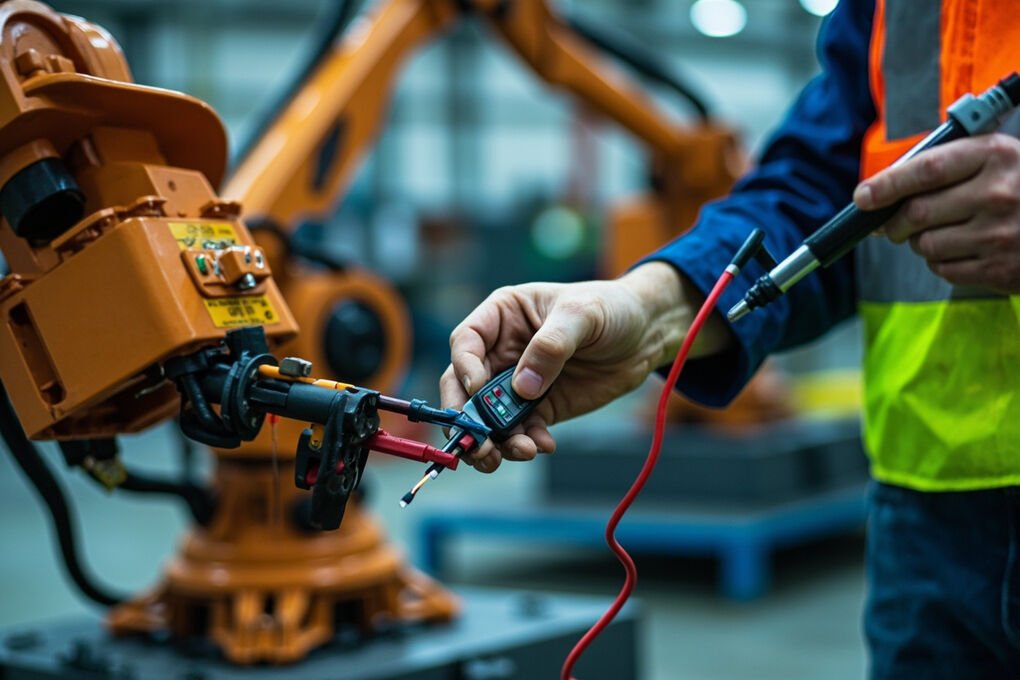
Cable failures are among the top causes of unplanned robot downtime—and unlike joint wear or motor issues, cable problems are entirely preventable with proper maintenance protocols. This guide covers robot cable maintenance best practices to maximize cable life and minimize production interruptions.
Why Robot Cables Fail
Understanding how robot cables fail is the first step to preventing failures. The primary failure mechanisms are:
1. Conductor Strand Fatigue (Most Common)
Each bend cycle causes microscopic cracks in the copper conductor strands. Over millions of cycles, these cracks propagate until the conductor breaks. Critically, the outer jacket may appear perfectly intact even when inner conductors are fractured—the cable fails without visible warning.
2. Jacket Abrasion and Cracking
Friction between the cable and robot arm internals, cable carriers, or adjacent cables wears the jacket. Chemical exposure (oil, coolant, cleaning solvents) accelerates jacket degradation. Once the jacket is compromised, insulation failure follows rapidly.
3. Thermal Cycling Damage
Robots in foundries, forge shops, or outdoor installations experience wide temperature swings. Each heating/cooling cycle expands and contracts the cable materials at different rates, creating micro-delamination between layers and progressive insulation degradation.
4. Connector Failures
Connector pins corrode from moisture and factory atmosphere. Solder joints crack from vibration. Poor connector design or incorrect mating/unmating procedure causes pin damage. Connector failures account for 15-20% of robot cable problems.
Robot Cable Maintenance Schedule
Daily Checks (Operator Level)
- Visual inspection of exposed cable sections for jacket damage
- Check cable routing for signs of chafing or rubbing against robot structure
- Verify cable connector seating—check for any loose retention clips
- Listen for unusual sounds during robot motion (cable chain rattle, rubbing)
Weekly Checks (Maintenance Technician)
- Full visual inspection of all accessible cable runs
- Check cable carrier (drag chain) for worn links, missing hardware, debris accumulation
- Verify cable has adequate slack throughout range of motion (no tight spots)
- Clean cable carriers and remove debris that could abrade cables
Quarterly Checks (Robotics Specialist)
- Electrical testing: use megohmmeter to check insulation resistance on all circuits
- Visual inspection inside cable carrier—remove cover and inspect inner cable condition
- Check strain relief at connectors for any signs of cable movement within the connector
- Review robot controller fault logs for intermittent cable-related errors
Annual Checks (OEM-Service or Specialist)
- Thermal imaging of cable runs during robot operation—hot spots indicate current concentration from strand breakage
- Full replacement of cables in high-cycle applications before warranty-style failure occurs
- Connector replacement if any pins show corrosion, wear, or intermittent contact
- Update cable replacement records to track actual vs. expected cable life
Predictive Maintenance: Using Data to Prevent Failures
Modern robot controllers log many events that indicate cable degradation:
- Encoder communication errors — Often caused by encoder cable strand breaks or EMI issues
- Unexpected axis position errors — Can indicate failing encoder or feedback cable
- Intermittent servo faults — Often related to power cable connector or conductor issues
- Ground fault detection events — Indicates insulation degradation in power cables
Review controller logs monthly and trend these events—if errors are increasing over time, plan cable replacement before failure.
Cable Replacement Best Practices
- Replace all cables in a complete set (power + signal + encoder) if one fails—others are likely degraded
- Use only OEM-specified or equivalent cables; substitute cables must meet or exceed original specifications
- Document the original cable routing with photos before removal
- Check new cable minimum bend radius matches the robot arm routing constraints
- Torque connector hardware to specification—over-tightening damages connector seals and strain reliefs
- After installation, run robot through full range 50+ times while monitoring for any signs of interference or binding
Reducing Robot Cable Stress: Engineering Improvements
If cable failures recur prematurely despite good maintenance, consider these engineering improvements:
- Add cable support grips — Take cable weight load off the connector termination
- Install additional cable guides — Reduce cable bend radius concentrations
- Upgrade to higher-cycle cables — Specify 20M+ cycle cables instead of standard 10M for high-speed applications
- Re-route cables — Move cables away from high-heat sources or areas of mechanical contact
- Use hybrid cables — Reduce total cable count by combining power, signal, and ethernet in one cable
Frequently Asked Questions
What is the typical lifespan of robot arm cables?
For standard industrial robot applications (moderate cycles, controlled environment), expect 3-5 years from quality cables. High-cycle applications (24/7 packaging, delta robots) may require replacement every 1-2 years. Poor routing, excessive bending stress, or harsh environments can shorten this significantly.
How do I know if a robot cable needs replacement before it fails?
Track controller fault logs for increasing encoder errors and servo faults. Use thermal imaging during operation to detect hot spots from current concentration in damaged conductors. Perform quarterly insulation resistance testing with a megohmmeter—declining insulation resistance is a clear replacement indicator.
Can I replace just one cable in a robot cable set?
While it’s technically possible, it’s not recommended. Cables in the same cable set have been subject to the same aging conditions. If one cable has failed, the others in the set are likely similarly degraded and will fail soon. Replace the entire set to avoid repeated maintenance interventions.