
Textile Machinery Cables: High
1. Introduction: The Demanding World of Textile Machinery Cabling The global textile industry represents one of the most demanding operating environments for industrial cables and wires. From high-speed ring spinning frames operating…
1. Introduction: The Demanding World of Textile Machinery Cabling
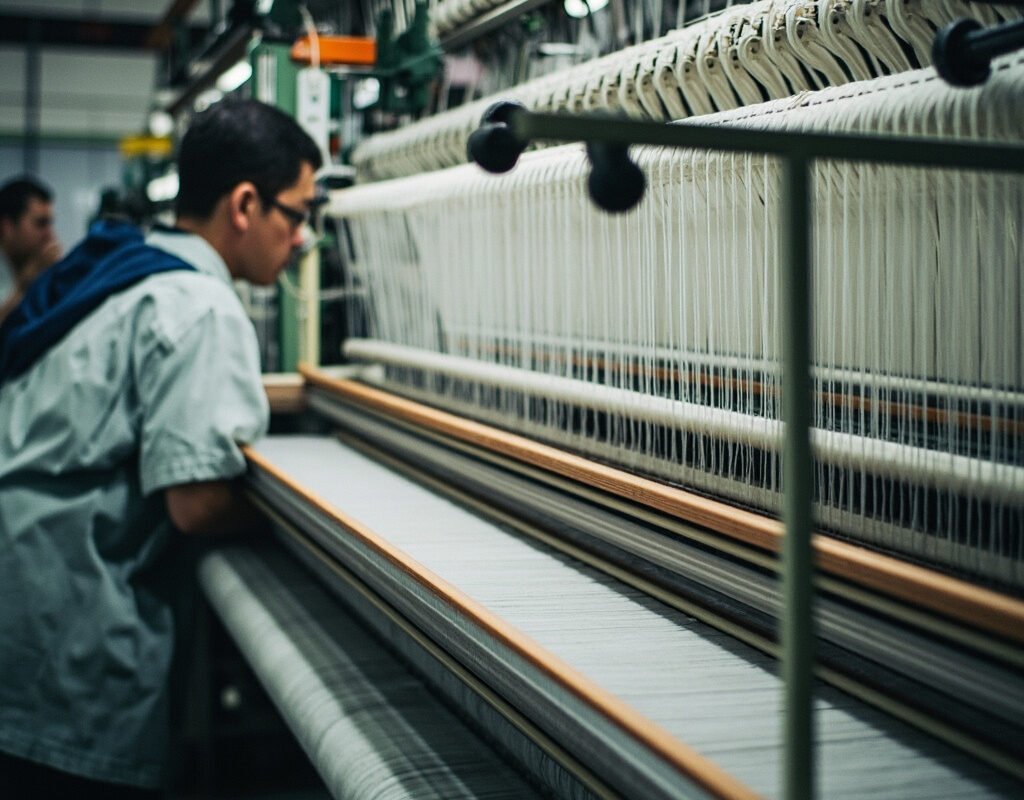
The global textile industry represents one of the most demanding operating environments for industrial cables and wires. From high-speed ring spinning frames operating at 20,000+ RPM to modern rapier looms executing millions of pick insertions per day, textile machinery subjects cables to an extraordinary combination of mechanical stresses: continuous bending in reciprocating carriages, torsional twisting in rotating spindles, constant vibration, exposure to cotton lint and fiber fly, and contact with spinning oils, lubricants, and cleaning solvents.
A standard industrial cable installed on a modern air-jet loom will typically fail within 3–6 months due to conductor fatigue from the relentless flexing of the sley carriage. In contrast, a purpose-engineered textile machinery cable — with finely stranded conductors, specialized polymer insulation, and optimized stranding geometry — can deliver 10–15+ million flex cycles before requiring replacement. This 5–10x improvement in service life directly translates to reduced unplanned downtime, lower maintenance costs, and higher Overall Equipment Effectiveness (OEE) for textile manufacturers.
Iflexcable has been engineering and manufacturing high-performance textile machinery cables for over a decade, serving OEMs and end-users across the full spectrum of textile production — from fiber preparation and spinning through weaving, knitting, dyeing, and finishing. This comprehensive guide examines the unique requirements of each textile machinery category, the technical specifications that matter most, and how to select the optimal cabling solution for your specific application.
2. Understanding Textile Machinery Cable Requirements by Machine Type
2.1 Spinning Frame Cables (Ring Spinning, Rotor Spinning, Air-Jet Spinning)
Modern spinning frames are among the most electronically sophisticated machines in any textile plant. A typical ring spinning frame with 1,200 spindles may contain:
| Subsystem | Cable Function | Key Stress Factors | Recommended Cable Type |
|---|---|---|---|
| Drafting system | Servo motor power + encoder feedback | Precision signal integrity, EMI from VFDs | Shielded servo cable with double-braid |
| Doffing robot / Auto-doffer | Multi-axis robotic arm movement | Torsion (±360°), compound bend-twist | Torsion-rated hybrid cable |
| Spindle drive belt | Individual spindle motor power distribution | High frequency vibration, oil exposure | Oil-resistant VFD cable, TC-ERP |
| Yarn break sensor | Signal transmission from photoelectric sensors | Long runs (up to 40m per frame), noise immunity | Low-capacitance data bus cable |
Critical Specification for Spinning Frames: The ring rail traverse system is the single most demanding application. The cable travels vertically along the entire spinning zone (typically 300–500mm stroke) at 25–40 complete cycles per minute, 24 hours a day, 350 days a year. Over a 5-year service life, this cable must endure 26–42 million flex cycles.
Formula: Annual Flex Cycles for Ring Rail Cable
N_annual = SPM × 60 × 24 × 350

Where:
  SPM = Strokes Per Minute (typically 25–40)
  Result example @ 35 SPM: 35 × 60 × 24 × 350 = 17,640,000 cycles/year
  5-year total: 88,200,000 flex cycles
This calculation makes clear why only premium continuously-flexible (CF) rated cables with TPE-E or PUR outer jackets can survive in this environment without premature failure.
2.2 Loom Cables (Rapier, Air-Jet, Projectile, Water-Jet)
Weaving looms present a fundamentally different stress profile compared to spinning frames:
Rapier Looms:
- Rapier head cables undergo extreme acceleration/deceleration forces (up to 12g peak)
- The sley/carrying bar executes horizontal oscillating motion at 400–800 picks per minute (ppm)
- Typical flex cycle count: 150–250 million over 10-year loom lifespan
- Critical requirement: Zero-compromise fatigue resistance in both bending and torsion modes
Air-Jet Looms:
- Main nozzle relay cables experience rapid pneumatic valve switching
- Electronic weft insertion systems require shielded data transmission
- Filling motion and let-off/w take-up systems use multi-axis servo cables
- Operating environment: High humidity (weft insertion requires moisture), lint accumulation near reed area
Key Standards Reference for Loom Cables:
| Standard | Application | Key Requirement |
|---|---|---|
| DIN VDE 0285 | Flexible cable testing | Minimum 20M bend test cycles |
| UL 2587 (TC-ERP) | Tray cable, exposed run | Oil resistance, sunlight resistance |
| ISO 9856 | Tensile strength of insulation | Min. 12.5 N/mm² for PUR jacket |
2.3 Knitting Machine Cables (Circular, Flat, Warp Knitting)
Knitting machinery introduces yet another set of challenges:
- Circular knitting machines: Rotating cam boxes and yarn carriers require cables that handle continuous rotation or oscillation around the machine cylinder
- Flat-bed knitting machines (computerized): The carriage traverses horizontally across the needle bed, dragging a complex harness of power, data, and pneumatic lines
- Warp knitting machines (Karl Mayer type): High-speed guide bar oscillation creates unique torsion patterns
Iflexcable Solution for Knitting Machines:
Our GRX-TR Series Torsion Cable features a special construction with twisted pairs having optimized lay lengths that accommodate the compound motion patterns found in flat-bed knitting carriages. The cable uses:
- 0.05mm² copper strands (Class 6 per IEC 60228) for ultimate flexibility
- PP (polypropylene) core insulation with TPE-E inner jacket
- PUR outer jacket with anti-friction surface finish
- Rated for ±180°/m torsion angle over 10M+ cycles
3. Technical Deep-Dive: What Makes a Great Textile Cable?
3.1 Conductor Design: The Foundation of Flex Life
The conductor is where flex life is won or lost. For textile applications, finer stranding always equals longer life:
| Conductor Type | Strand Diameter | Cross-section Example | Relative Flex Life |
|---|---|---|---|
| Fine-stranded (Class 5) | 0.10 mm | 19×0.10 mm (0.14 mm²) | ~3× baseline |
| Extra-fine (Class 6) | 0.05 mm | 44×0.05 mm (0.09 mm²) | ~8–10× baseline |
| Ultra-fine (special) | 0.03 mm | 76×0.03 mm (0.054 mm²) | ~15–20× baseline |
Important trade-off: Ultra-fine stranding increases material cost by 40–80% and reduces current-carrying capacity slightly due to increased skin effect and packing inefficiency. However, for the low-current signal and control circuits common in textile machinery (most under 5A), this trade-off overwhelmingly favors finer stranding.
3.2 Insulation Materials: Surviving the Textile Environment
Textile environments expose cables to:
- Spinning oils and lubricants (mineral oil-based, sometimes synthetic esters)
- Cotton/synthetic fiber lint — abrasive, can work into cable jacket micro-cracks
- Humidity — especially in dyeing and finishing areas (RH up to 95%)
- Heat — near drying cylinders and heat-setting stenters (ambient up to 80°C)
- Cleaning chemicals — alkaline detergents, acids (for wool carbonizing)
Material Comparison Table:
| Material | Oil Resistance | Temp Range | Flex Life Index | Cost Index | Best For |
|---|---|---|---|---|---|
| TPE (Thermoplastic Elastomer) | Good | -40°C ~105°C | ★★★☆☆ | ★★☆☆☆ | General-purpose flexing applications |
| TPE-E (TPU/Ester) | Excellent | -40°C ~125°C | ★★★★☆ | ★★★☆☆ | High-end spinning frames, looms |
| PUR (Polyurethane) | Outstanding | -50°C ~125°C | ★★★★★ | ★★★★☆ | Premium applications, harsh environments |
Recommendation: For new textile machinery installations, TPE-E or PUR insulated/jacketed cables provide the best balance of performance and long-term value. The initial 30–50% higher cost is recovered within the first year through eliminated maintenance calls.
3.3 Shielding Strategies for Noisy Textile Environments
Textile plants are electrically noisy environments:
- Variable Frequency Drives (VFDs) on every major motor create significant electromagnetic interference (EMI)
- Large inductive loads (main drives, suction fans) generate voltage transients
- Long cable runs between control cabinets and machine-mounted devices act as antennas
- Proximity sensors and encoders require clean signal paths for precise positioning
Shielding Options:
| Shield Type | Coverage | Effectiveness | Flex Impact | Use Case |
|---|---|---|---|---|
| Foil (AL-PET) | 100% | Good vs HF noise | Minimal | Data bus, sensor signals |
| Braided Copper (85%) | 85% | Good vs LF/HF noise | Moderate | Encoder feedback, servo drive |
| Combined Foil+Braid | 100%+85% | Excellent (broadband) | Significant | High-precision servo systems |
For encoder feedback cables on modern CNC-controlled looms, combined shielding (foil + braid) is strongly recommended, with individual pair shielding for multi-pair configurations. The slight reduction in flexibility (approximately 15–20% increase in bending force) is offset by the dramatic improvement in signal integrity.
4. Textile-Specific Hazards & Mitigation Strategies
4.1 Cotton Lint & Fiber Fly Accumulation
Cotton lint is the silent killer of textile cables. It works its way into:
- Cable bundle ties and fasteners, creating pressure points
- Jacket micro-abrasions, wicking moisture inward
- Connector housings, causing intermittent contact failures
Mitigation approaches:
- Smooth-surface PUR jacket — reduces lint adhesion by 60–70% vs. textured PVC
- Continuous conduit/hose protection — especially in high-lint zones (spinning frame draft area)
- Regular preventive maintenance schedule — compressed-air blow-out of cable carriers every 2–4 weeks
- Over-spec conductor gauge — build in margin against undetected corrosion from trapped moisture
4.2 Oil & Lubricant Exposure
Spinning frames use various oils:
- Ring frame lubricants: Light mineral oil (ISO VG 32–68), applied to gears, bearings, and the ring rail system
- Spindle oil: Very light oil (ISO VG 2–10), misted during high-speed operation
- Gear box oil: Heavier mineral or synthetic oil
Oil Resistance Test Data (per IEC 60811-404):
| Jacket Material | Volume Increase after 7 days @70°C in IRM 902 oil | Rating |
|---|---|---|
| Oil-resistant PVC (Type II) | +15~25% | Marginal |
| TPE | +5~12% | Acceptable |
| TPE-E / PUR | <+5% | Excellent |
Only TPE-E or PUR jacketed cables should be specified for any application within 2 meters of spinning oil application points.
4.3 Static Electricity in Synthetic Fiber Processing
When processing polyester, nylon, or other synthetic fibers, static charge buildup can reach 15–50 kV on machinery surfaces. While this primarily affects process quality (fiber repulsion, dust attraction), it also poses risks to cable insulation integrity over time through partial discharge degradation.
Solution: Specify cables with static-dissipative jacket materials (surface resistivity 10⁹–10¹¹ Ω/sq) for synthetic fiber processing areas. Iflexcable offers the GRX-SD series with conductive carbon-loaded outer layers specifically for this requirement.
5. Product Recommendations: Iflexcable Textile Cable Portfolio
5.1 GRX-TF Series: Textile Frame Control Cable
- Conductor: Bare copper, Class 6 extra-fine stranding (0.05mm strands)
- Insulation: TPE-E, color-coded per IEC 304
- Shielding: Optional AL/PET foil + TC braid (85% coverage)
- Outer Jacket: PUR, matte gray (RAL 7001), anti-static option available
- Temperature range: -40°C ~ +125°C (fixed) / -25°C ~ +100°C (flexing)
- Bend radius: 7.5×OD (fixed) / 12×OD (moving)
- Flex cycles (DIN VDE test): >20 million (purge test)
- Applications: Ring rail traverse, drafting system, doffing robot
- Certifications: CE, UL, RoHS, REACH
5.2 GRX-LR Series: Loom Rapier Cable
- Specialized construction for extreme acceleration environments
- Strain relief elements: Integrated aramid (Kevlar) load-bearing members
- Torsion rating: ±360°/300mm length, >5 million torsion cycles
- Jacket: PUR-HF (hydrolysis-resistant), black
- Speed rating: Suitable for loom speeds up to 900 ppm
- Custom lengths: Available in 1m increments, pre-terminated options
5.3 GRX-KN Series: Knitting Machine Cable
- Optimized for flat-bed carriage traversal (circular knitting variants available)
- Hybrid construction: Power + data + optional pneumatic in single cable
- Low-friction jacket: PTFE-impregnated PUR for reduced carriage drag
- Bending radius: 5×OD (minimum dynamic)
- Temperature rating: Up to 105°C (continuous flexing)
6. Installation Best Practices for Textile Cables
6.1 Cable Carrier Selection
The choice of cable carrier (drag chain, energy chain, or flexible conduit) dramatically affects cable service life:
| Carrier Type | Best For | Flex Radius Ratio | Maintenance Interval |
|---|---|---|---|
| Plastic drag chain (closed) | Debris-heavy environments | R ≥ 8–12×OD | Monthly inspection |
| Steel carrier | Heavy loads, high temp | R ≥ 10–12×OD | Quarterly inspection |
| Spiral PU conduit | Multi-axis motion | R ≥ 5×OD (relaxed) | Replace annually |
| No carrier (free-hanging) | Slow, large-radius swings | R ≥ 15–20×OD | N/A |
Critical rule: Never install a textile cable with a bend radius smaller than the manufacturer’s specified minimum dynamic radius, even if it physically fits in a tighter carrier. The penalty in reduced service life is severe — each 10% underspecification of bend radius can reduce flex life by 30–50%.
6.2 Cable Routing Guidelines
- Avoid crossing power and signal cables at right angles where possible; if they must cross, maintain 50mm minimum separation
- Support free-hanging cable sections every 300–500mm to prevent sag-induced stress concentration
- Leave 5–10% slack in all moving cable installations to accommodate thermal expansion and mechanical tolerance stack-up
- Label all cables at both ends with machine ID, circuit function, and installation date for future maintenance reference
- Document routing with photographs during initial commissioning for troubleshooting reference
6.3 Termination & Connection Quality
Poor termination is responsible for an estimated 35% of textile cable field failures, exceeding actual cable degradation as a failure mode. Ensure:
- Ferrule crimps on all multi-strand conductor terminations
- Proper torque values on screw terminals (never over-tighten, which crushes fine strands)
- Strain relief glands rated IP65 minimum at panel entry points
- Regular retorque schedules (initially at 1 month post-installation, then quarterly)
7. Case Study: Major Textile Manufacturer Upgrade
Customer Profile: Large-scale cotton yarn producer in Vietnam, operating 120 ring spinning frames (each 1,440 spindles)
Problem: Original equipment cables (standard PVC, Class 5 stranding) were failing at an average rate of 3–4 cables per frame per month, causing unscheduled downtime of approximately 4–6 hours per occurrence. Total annual cost of cable-related downtime exceeded $280,000 USD.
Solution Implemented: Iflexcable GRX-TF Series complete cable retrofit:
- Ring rail traverse: GRX-TF-18×0.75 (18-core control cable, 7.8mm OD)
- Drafting servo: GRX-TF-SERVO-4×2.5+ (4-core servo power + feedback hybrid)
- Auto-doffer: GRX-TF-TORSION-12×0.5 (torsion-rated 12-core, 6.2mm OD)
- Total cables replaced per frame: 47 (varies by frame configuration)
Results After 24 Months:
| Metric | Before (PVC Standard) | After (Iflexcable TF) | Improvement |
|---|---|---|---|
| Monthly cable failures/frame | 3.4 | 0.07 | 98% reduction |
| Annual downtime cost | $280,000 | $8,200 | 97% reduction |
| Total project ROI period | — | 8.3 months | — |
Key success factor: The combination of Class 6 ultra-fine stranding, TPE-E insulation, and PUR jacket provided the necessary durability for the extreme cycle counts encountered in ring rail traverse applications.
8. Standards & Compliance Framework
Textile machinery cables must satisfy multiple overlapping regulatory frameworks depending on target market:
| Region/Country | Primary Standard | Additional Requirements |
|---|---|---|
| United States | UL 62 (Flexible Cords & Cables) | UL listing, NEC Article 725/726 compliance |
| China | GB/T 5023 / GB/T 9330 | CCC certification (where applicable) |
| International (export) | IEC 60227 / IEC 60228 | IECEx for hazardous areas (solvent vapor) |
Note: For textile machinery destined for export markets, dual or triple certification (CE + UL + CCC) significantly increases market access and customer confidence.
9. Common Selection Mistakes to Avoid
Mistake #1: Underspecifying Conductor Gauge Based on Static Current Draw
Many engineers calculate conductor size based purely on steady-state current, ignoring the derating factors applicable in flexing installations:
- Temperature derating (textile mills often run 30–40°C ambient)
- Bundle derating (multiple cables in tight carrier)
- Flex-cycle derating (work hardening increases resistance over time)
Rule of thumb: Specify one gauge size larger than the theoretical minimum for any textile cable in continuous flexing service.
Mistake #2: Using “Standard” Industrial Cable in Textile Applications
Standard industrial automation cables (even reputable brands) are engineered for general factory environments — not the specific combination of oil, lint, heat, and extreme flex cycling found in textile production. Always specify textile-specific or application-validated cable grades.
Mistake #3: Ignoring Torsion Requirements
If the cable experiences ANY rotational component in its motion path (carriage rotation, drum winding, robot wrist axis), a pure bending-rated cable will fail prematurely. Torsion-rated cables have fundamentally different internal construction (optimized strand lay direction, different bundling geometry).
Mistake #4: Neglecting Chemical Compatibility
Beyond oil resistance, consider exposure to:
- Alkaline scouring agents (in wet-processing areas adjacent to spinning)
- Acid treatments (carbonizing for wool blends)
- Hydrogen peroxide bleaching agents (near dye houses)
- Sizing agents (PVA, starch — water-soluble but hygroscopic)
Always review the complete chemical exposure profile when specifying cable jacket material.
10. Future Trends: Industry 4.0 & Smart Textile Manufacturing
The next generation of textile machinery is driving new cable requirements:
Integrated Sensor Cables: Modern “smart” spinning frames incorporate real-time monitoring sensors (yarn tension, slub detection, humidity) that require miniature multi-channel data cables (often 0.08–0.14mm²) running alongside traditional power/control lines. Hybrid cable constructions that combine these functions reduce installation complexity.
Ethernet-Based Communication: Traditional fieldbus systems (Profibus, DeviceNet) are being replaced by PROFINET and EtherCAT in newer textile machines, requiring Cat5e/Cat6-grade industrial Ethernet cable with enhanced flex ratings.
Energy Efficiency Monitoring: Power measurement cables (current transformers, voltage sensing) are increasingly integrated into main supply harnesses for real-time energy management — requiring additional shielded pairs in existing cable bundles.
Predictive Maintenance Integration: Some advanced textile OEMs are embedding condition monitoring (partial discharge detection, temperature sensing) directly into critical cable assemblies, enabling predictive failure alerts before actual breakdown occurs.
11. Conclusion: Investing in the Right Textile Cable
Selecting the correct cable for textile machinery is not merely a procurement decision — it is a strategic investment in operational reliability, product quality, and competitive advantage. The difference between a commodity-grade PVC cable and an engineered TPE-E/PUR textile cable from a specialist manufacturer like Iflexcable can mean the difference between monthly emergency repairs and years of trouble-free operation.
Key Takeaways:
- Match cable class (conductor stranding, insulation, jacket) to the specific machine type and stress profile
- Never compromise on bend radius or torsion rating — the cost of overspecification is trivial compared to failure consequences
- Plan for the complete chemical environment, not just obvious exposures
- Consider lifecycle cost, not just initial purchase price
- Partner with a supplier who understands textile industry requirements and can support custom/OEM solutions
Iflexcable stands ready to support your textile machinery cabling needs with:
- Comprehensive product portfolio covering all textile machine categories
- Custom cable design and manufacturing capabilities
- Rapid prototyping (samples within 5–7 business days)
- Global logistics and technical support network
- Competitive pricing with volume discounts available
Contact our textile industry specialists today for application consultation, sample requests, or quotation inquiries.
Last Updated: April 2026 | Iflexcable — Your Trusted Partner for Industrial Cable Solutions
Applicable Standards: IEC 60228, IEC 60227, UL 62, EN 50525, ISO 9856, DIN VDE 0285