
Ultra High Flex vs Standard High Flex Cable: How to Choose the Right Robot Cable
Not all flexible cables are created equal. In high-speed robotic and automation applications, choosing between a standard high flex cable and an ultra high flex cable can mean the difference between a…
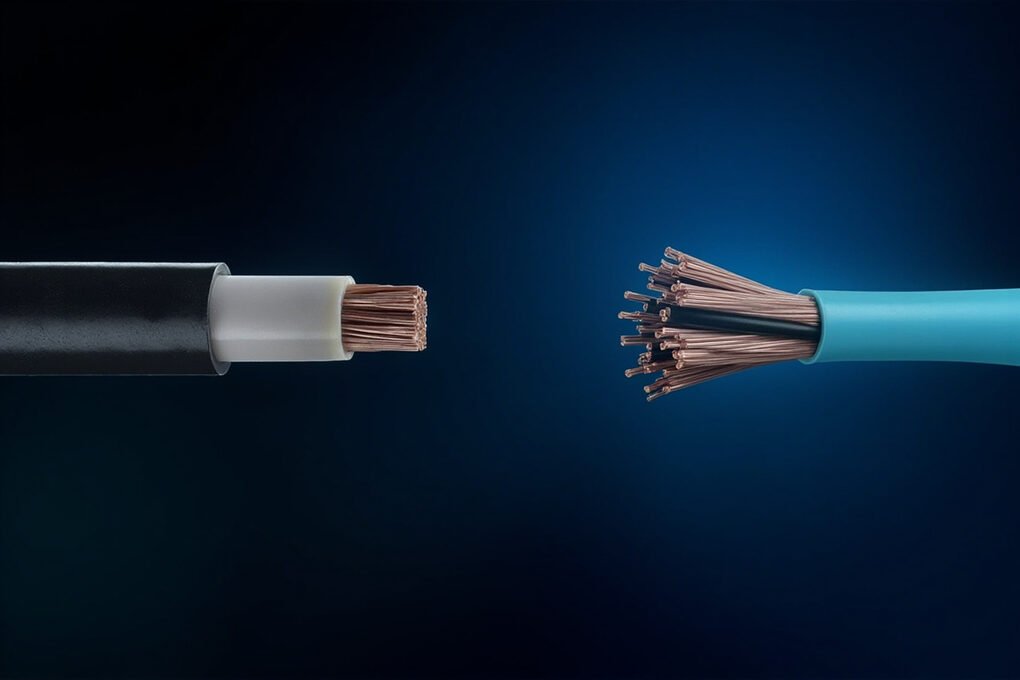
Not all flexible cables are created equal. In high-speed robotic and automation applications, choosing between a standard high flex cable and an ultra high flex cable can mean the difference between a cable that lasts months or one that lasts years—directly impacting your maintenance costs and production uptime.
What Is High Flex Cable?
A high flex cable is engineered to withstand repeated bending cycles that would destroy ordinary cables. They’re the backbone of modern robotic arms, automated packaging lines, and cable carrier (drag chain) systems. Standard high flex cables typically handle 1 million to 10 million bending cycles.
What Is Ultra High Flex Cable?
An ultra high flex cable (also called super flex or premium flex cable) pushes the engineering envelope further. Using specially processed conductors—often tinsel wire or finely stranded Class 6-7 conductors—these cables achieve 10 million to 30 million+ bending cycles with minimal degradation.
High Flex vs Ultra High Flex: Side-by-Side Comparison
| Specification | Standard High Flex Cable | Ultra High Flex Cable |
|---|---|---|
| Bending cycles | 1M – 10M cycles | 10M – 30M+ cycles |
| Conductor class | Class 5 (fine stranded) | Class 6-7 (ultra-fine stranded) |
| Typical jacket | PVC or PUR | PUR (premium grade) |
| Minimum bend radius | 10x cable OD | 6-8x cable OD |
| Cost | Moderate | Higher upfront, lower TCO |
| Best for | SCARA, standard industrial arms | Delta, articulated 6-axis, cobots |
Application Guide: When Do You Need Ultra High Flex?
Choose ultra high flex cable when:
- Your robot operates 24/7 with continuous multi-axis motion
- You have a delta robot or 6-axis articulated robot with tight cable routing
- You want to minimize unplanned downtime and cable replacement frequency
- Your cable carrier (drag chain) has very tight bending constraints
- Total Cost of Ownership (TCO) matters more than initial cable cost
Standard high flex cable is sufficient when:
- Your robot operates in standard 8-hour shifts with moderate cycle counts
- Cable replacement is straightforward and does not cause significant production losses
- You have larger bending radius allowances in your cable routing design
IFlexCable’s Ultra High Flex Robot Cable Range
IFlexCable’s ultra high flex cable series features Class 6 ultra-flexible copper conductors, premium PUR jackets rated for 10+ million bending cycles, and optional braided shielding for EMI-sensitive encoder and bus communication applications.
All cables are available with TUV and CE certification, and support OEM customization for specific robot brands and installation requirements.
Frequently Asked Questions
How many bending cycles does an ultra high flex cable have?
IFlexCable’s ultra high flex cables are rated for 10 million to 30 million+ bending cycles depending on the specific construction, bending radius, and operating temperature. Class 6 conductors with premium PUR jackets achieve the highest cycle ratings.
What is the difference between high flex and continuous flex cable?
High flex cable refers to cables designed for reciprocal bending (back-and-forth). Continuous flex cable is designed for uninterrupted rotary or linear motion in cable carriers. The terms are sometimes used interchangeably, but continuous flex cables are specifically engineered for energy chain (drag chain) applications.
Is ultra high flex cable worth the extra cost?
For delta robots, 6-axis articulated robots, and 24/7 production lines, yes. The higher upfront cost of ultra high flex cable is typically recovered within 6-12 months through reduced cable replacements, less unplanned downtime, and lower maintenance labor costs.
Can ultra high flex cables be used in cable carriers (drag chains)?
Absolutely. IFlexCable’s ultra high flex cable series is specifically rated for drag chain and energy chain applications with PUR jackets that resist oil, coolant, and mechanical abrasion inside cable carriers.